

Introduction
Every business has repetitive work.
It does not matter whether you run a small local company, a growing agency, a healthcare practice, a real estate firm, or a large organization. Every day, your team spends time on tasks that need to be completed over and over again.
Customer inquiries arrive through your website.
New leads submit forms.
Appointments need to be scheduled.
Follow-up emails need to be sent.
Customer information needs to be entered into a CRM.
Support requests need to be answered.
Invoices need processing.
Notifications need sending.
Individually, these tasks may seem small.
However, when they happen hundreds or even thousands of times every month, they consume a significant amount of time and resources.
Many business owners do not realize how much repetitive work is slowing down their growth.
They focus on generating more leads, hiring more employees, or investing in more marketing.
While these activities are important, they often fail to address a major issue happening behind the scenes.
Too much time is being spent on manual work.
This is where workflow automation services become valuable.
Instead of requiring employees to complete repetitive tasks manually, workflow automation creates systems that handle those tasks automatically.
The result is a business that operates more efficiently, responds faster, and scales more effectively.
In this guide, we will explore how workflow automation services eliminate repetitive work, improve efficiency, and help businesses focus on growth rather than administration.
What Are Workflow Automation Services?
Before discussing the benefits, it is important to understand what workflow automation actually means.
A workflow is simply a series of steps that happen to complete a task.
For example:
A customer submits a contact form.
The information is reviewed.
A team member enters the lead into a CRM.
A confirmation email is sent.
A sales representative follows up.
An appointment is scheduled.
This entire process is a workflow.
Without automation, employees complete each step manually.
With workflow automation, much of the process happens automatically.
The lead enters the CRM automatically.
The confirmation email is sent automatically.
The sales team receives a notification automatically.
Follow-up tasks are created automatically.
Instead of spending time moving information between systems, employees can focus on more valuable activities.
Workflow automation services help businesses identify repetitive processes and create automated systems that reduce manual effort.
Why Repetitive Work Is a Bigger Problem Than Most Businesses Realize

Many business owners accept repetitive work as a normal part of operations.
They assume their employees simply need to work harder or become more efficient.
However, repetitive work creates several hidden problems.
It Consumes Valuable Time
Time is one of the most limited resources in any business.
Every minute spent on repetitive tasks is a minute that cannot be spent on growth, customer relationships, or strategic planning.
Consider how much time employees spend:
- responding to common inquiries
- updating customer records
- scheduling appointments
- sending reminders
- transferring information between systems
These activities are necessary, but they rarely create significant business value.
Workflow automation helps reduce this burden.
It Increases Human Error
Manual work often leads to mistakes.
Information gets entered incorrectly.
Follow-ups are forgotten.
Customer details become outdated.
Appointments are missed.
Even highly skilled employees make errors when performing repetitive tasks repeatedly.
Automation creates consistency.
The process happens the same way every time.
This reduces mistakes and improves accuracy.
It Creates Employee Frustration
Most employees do not enjoy repetitive administrative work.
People generally prefer solving problems, helping customers, and contributing to meaningful projects.
When large portions of the day are spent performing repetitive tasks, motivation often decreases.
Workflow automation allows employees to focus on higher-value work that is more engaging and productive.
It Slows Down Customer Communication
Modern customers expect fast responses.
When communication depends entirely on manual processes, delays become common.
A lead submits a form.
Hours pass before someone responds.
A customer sends a question.
The response arrives the next day.
These delays create a poor experience.
Workflow automation helps businesses respond more quickly and consistently.
Common Business Processes That Can Be Automated
One of the biggest misconceptions about automation is that it only applies to large organizations.
In reality, small and medium-sized businesses often benefit the most.
Many repetitive activities can be automated.
Lead Capture
Every lead represents a potential opportunity.
However, many businesses still rely on manual processes to manage incoming inquiries.
A customer submits a form.
Someone reviews it.
Someone enters information into a CRM.
Someone sends a follow-up.
Workflow automation eliminates much of this manual effort.
Lead information can be collected, organized, and distributed automatically.
Customer Communication
Customers expect fast responses.
Workflow automation can trigger automated communication immediately after an inquiry is received.
Examples include:
- confirmation emails
- welcome messages
- appointment reminders
- follow-up sequences
This ensures customers receive timely communication without requiring constant manual attention.
Appointment Scheduling
Scheduling appointments can become surprisingly time-consuming.
Availability must be checked.
Appointments must be confirmed.
Reminders must be sent.
Changes must be managed.
Automation streamlines this process by allowing customers to book appointments and receive updates automatically.
CRM Updates
Many businesses struggle to keep CRM data organized.
Employees become busy.
Records are forgotten.
Information becomes outdated.
Workflow automation helps maintain accurate records by updating CRM systems automatically whenever new information is collected.
Team Notifications
When important events occur, teams need to be informed quickly.
Examples include:
- new lead submissions
- completed forms
- appointment bookings
- support requests
Automation ensures the right people receive the right information at the right time.
How Workflow Automation Services Work
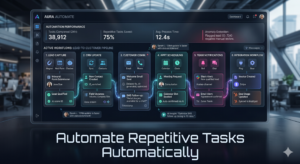
The concept behind workflow automation is simple.
A trigger occurs.
The system performs one or more actions automatically.
For example:
A customer submits a website form.
This action triggers the workflow.
The system then:
- creates a lead record
- sends a confirmation email
- alerts the sales team
- schedules follow-up tasks
Everything happens automatically.
The employee does not need to move information manually.
The system handles the process.
The same principle can be applied across many business functions.
The goal is not to automate everything.
The goal is to automate repetitive activities that consume time and create bottlenecks.
Workflow Automation Services for Customer Communication
Customer communication is one of the most valuable areas to automate.
Every business communicates with customers.
Questions are asked.
Information is requested.
Appointments are booked.
Support requests are submitted.
As a business grows, communication volume increases.
Without automation, teams often struggle to keep up.
Workflow automation helps businesses create faster and more consistent communication processes.
For example:
When a customer submits a contact form, the system can immediately send a personalized confirmation message.
When an appointment is booked, reminders can be sent automatically.
When a customer requests information, automated workflows can provide resources instantly.
These improvements help businesses provide better customer experiences while reducing workload.
Why Faster Communication Matters
Speed has become a competitive advantage.
Customers often contact multiple businesses before making a decision.
The company that responds first frequently gains an advantage.
This does not mean businesses need employees monitoring every communication channel twenty-four hours a day.
It means businesses need systems that can respond immediately.
Workflow automation helps make this possible.
Instead of waiting for a team member to become available, customers receive immediate engagement.
This creates a stronger first impression and improves the likelihood of conversion.
For many businesses, faster communication alone can justify the investment in workflow automation services.
Workflow Automation Services for Lead Management
Generating leads is important.
However, generating leads is only half of the process.
The other half is managing those leads properly.
Many businesses spend thousands of dollars every month on SEO, Google Ads, social media marketing, and other marketing campaigns. Their goal is simple: attract potential customers.
But what happens after someone becomes a lead?
This is where many businesses struggle.
A lead submits a form.
An email arrives in the inbox.
Someone plans to follow up later.
The day becomes busy.
Other priorities appear.
The lead is forgotten.
Unfortunately, this happens more often than many business owners realize.
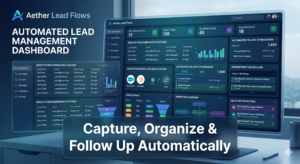
Workflow automation services help solve this problem by creating a structured process for handling every lead.
For example, when a prospect submits a contact form, the system can automatically:
- create a lead record
- assign the lead to a team member
- send a confirmation email
- notify the sales team
- schedule follow-up activities
Nothing is forgotten.
Nothing falls through the cracks.
Every lead enters the same process.
This creates consistency and improves conversion rates.
Why Lead Management Automation Matters
Many businesses focus heavily on generating more leads.
However, improving lead management can often create faster results than increasing marketing spend.
Imagine two businesses.
Business A generates 100 leads per month and converts 10%.
Business B generates the same 100 leads but converts 20%.
Business B doubles its results without generating additional traffic.
Workflow automation helps improve these outcomes by ensuring leads receive timely attention.
Faster responses often lead to higher conversion rates.
Better organization often leads to better customer experiences.
The result is a more effective sales process.
Workflow Automation Services for Sales Follow-Up
One of the biggest reasons businesses lose sales opportunities is poor follow-up.
Most customers do not buy immediately.
They need time.
They may compare options.
They may discuss decisions internally.
They may simply become distracted.
This means follow-up communication is extremely important.
The challenge is that manual follow-up is difficult to manage consistently.
Employees become busy.
Tasks are forgotten.
Opportunities disappear.
Workflow automation helps create a reliable follow-up system.
For example:
A prospect downloads a guide.
The system sends a thank-you email.
Three days later, additional information is sent.
A week later, a follow-up message is delivered.
The sales team receives a reminder to make contact.
Everything happens automatically.
The prospect remains engaged.
The business remains visible.
No one needs to manually track every step.
Workflow Automation Services for Appointment Scheduling
Appointment scheduling may seem like a simple process.
In reality, it often consumes a significant amount of time.
Customers ask about availability.
Employees check calendars.
Appointments are confirmed.
Reminder messages are sent.
Changes are managed.
Cancellations are handled.
As appointment volume increases, these tasks become more challenging.
Workflow automation services simplify the process.
Customers can schedule appointments online.
Availability is checked automatically.
Confirmation messages are sent instantly.
Reminder messages are delivered before the appointment.
Calendar updates happen automatically.
This creates a better experience for both customers and employees.
The customer enjoys a smoother process.
The business spends less time on administration.
Reducing No-Shows Through Automation
Missed appointments cost businesses money.
Whether you operate a healthcare clinic, consulting firm, real estate agency, or service business, no-shows create inefficiencies.
Workflow automation helps reduce this problem.
Automated reminders can be sent through:
- SMS
- calendar notifications
Customers receive timely reminders before appointments.
Confirmation requests can be automated.
Rescheduling options can be provided.
These small improvements often lead to significant reductions in missed appointments.
AI-Powered Workflow Automation
Traditional automation follows predefined rules.
A trigger occurs.
An action happens.
AI-powered workflow automation takes things further.
Artificial intelligence can help businesses make workflows smarter.
Instead of simply moving information between systems, AI can analyze information and assist with decision-making.
For example:
An AI chatbot can qualify leads before they enter the sales process.
An AI voice agent can collect customer information during a phone call.
AI systems can categorize inquiries based on urgency.
Customer requests can be routed automatically to the correct department.
This allows businesses to automate not only tasks but also portions of the decision-making process.
As AI technology continues evolving, workflow automation services are becoming more powerful and more valuable.
How AI Chatbots Fit Into Workflow Automation
AI chatbots are often one of the first automation tools businesses implement.
Their role extends far beyond answering questions.
Modern chatbots can become part of a larger workflow automation system.
For example:
A visitor arrives on a website.
The chatbot starts a conversation.
Contact information is collected.
The lead enters the CRM.
The sales team receives a notification.
A follow-up sequence begins.
An appointment is scheduled.
Everything happens within a connected workflow.
This creates a seamless experience for both the customer and the business.
How AI Voice Agents Fit Into Workflow Automation
Phone calls remain one of the most important communication channels for many businesses.
However, handling every call manually can be difficult.
AI voice agents help solve this challenge.
When integrated into workflow automation systems, voice agents can:
- answer incoming calls
- collect customer information
- qualify leads
- schedule appointments
- update CRM records
- trigger follow-up actions
Instead of operating as standalone tools, they become part of a larger automation ecosystem.
This is where businesses often see the greatest value.
Real Business Example: HVAC Company
Consider an HVAC company that receives dozens of service requests every week.
Before automation:
Calls are answered manually.
Customer information is written down.
Appointments are scheduled manually.
Follow-ups depend on employee availability.
As the business grows, these processes become difficult to manage.
After implementing workflow automation services:
AI voice agents answer calls.
Customer information enters the CRM automatically.
Appointments are scheduled automatically.
Technicians receive notifications.
Customers receive reminders.
The business operates more efficiently without increasing administrative workload.
Real Business Example: Dental Clinic
Dental clinics manage a large number of appointments.
Patients schedule visits.
Appointment reminders need sending.
Rescheduling requests occur frequently.
Without automation, staff members spend significant time managing these activities.
Workflow automation simplifies the process.
Appointments are booked online.
Reminders are delivered automatically.
Patient information remains organized.
The administrative burden decreases significantly.
This allows staff to focus more on patient care.
Real Business Example: Real Estate Agency
Speed matters in real estate.
Potential buyers and sellers often contact multiple agents.
The first meaningful response can influence who wins the business.
Workflow automation helps agencies respond faster.
Website inquiries trigger immediate follow-up.
Lead information enters the CRM automatically.
Agents receive notifications.
Appointments can be scheduled quickly.
The entire process becomes more efficient.
This helps agencies improve lead conversion and customer satisfaction.
Real Business Example: Marketing Agency
Marketing agencies often receive inquiries from businesses interested in services.
These inquiries vary significantly.
Some prospects are highly qualified.
Others are not.
Workflow automation helps organize the process.
Leads are captured automatically.
Information is collected.
Prospects are categorized.
The sales team receives qualified opportunities.
This improves efficiency and helps agencies focus their attention where it matters most.
Real Business Example: Cleaning Company
Cleaning companies frequently receive quote requests.
Without automation, staff members spend considerable time responding to repetitive inquiries.
Workflow automation helps streamline this process.
Customers submit information online.
The system gathers details automatically.
Follow-up communication begins immediately.
Appointments can be scheduled.
Quotes can be delivered faster.
This improves both efficiency and customer experience.
The Biggest Benefit: Giving Your Team Time Back
At its core, workflow automation is not really about technology.
It is about time.
Every repetitive task consumes time.
Every manual process consumes time.
Every administrative activity consumes time.
Workflow automation services help businesses reclaim that time.
Employees spend less time on repetitive work.
Managers spend less time overseeing routine tasks.
Business owners spend less time solving operational bottlenecks.
Instead, they can focus on growth, customer relationships, and strategic priorities.
This is one of the main reasons workflow automations has become such an important investment for modern businesses.
It helps organizations do more without simply adding more work.
Benefits of Workflow Automation Services
At this point, you may be wondering:
“What are the actual benefits of workflow automation services?”
While every business is different, most organizations experience improvements in several key areas.
Save Time
Time savings are often the most immediate benefit.
Many employees spend hours every week on tasks that could be automated.
For example:
- sending follow-up emails
- updating CRM records
- scheduling appointments
- moving information between systems
- responding to common inquiries
When these activities are automated, teams gain valuable time that can be used for more important work.
Over the course of a month or year, the time savings can be substantial.
Improve Efficiency
Workflow automation services help businesses operate more smoothly.
Processes become organized.
Tasks happen automatically.
Information moves quickly between systems.
Instead of relying on manual coordination, businesses create structured workflows that operate consistently.
This improves overall efficiency across the organization.
Reduce Human Error
Even great employees make mistakes.
It is a natural part of human work.
However, repetitive tasks often increase the likelihood of errors.
Information may be entered incorrectly.
Tasks may be forgotten.
Important details may be missed.
Automation reduces these risks by standardizing processes.
The same workflow happens every time.
This creates more reliable outcomes.
Improve Customer Experience
Customers appreciate speed and consistency.
They want quick responses.
They want updates.
They want a smooth experience.
Workflow automation helps businesses deliver these experiences more effectively.
When communication is fast and organized, customer satisfaction often improves.
Increase Scalability
Growth creates complexity.
As businesses attract more customers, workloads increase.
Without automation, growth often requires hiring additional employees simply to manage administrative work.
Workflow automation services allow businesses to handle larger volumes of activity without dramatically increasing staffing requirements.
This makes growth more sustainable.
The ROI of Workflow Automation Services
Business owners naturally want to know whether automation is worth the investment.
The answer depends on the specific business, but the return on investment often comes from several areas.
Reduced Administrative Costs
When repetitive tasks are automated, employees spend less time on routine work.
This increases productivity and allows teams to focus on higher-value activities.
More Leads Captured
Workflow automation helps ensure that leads receive timely responses.
Faster communication often results in more opportunities being converted into customers.
Improved Team Productivity
Employees become more productive when they spend less time on repetitive tasks.
This creates value across the entire organization.
Better Customer Retention
Customers are more likely to remain loyal when they receive excellent service.
Automation helps businesses provide consistent communication and support.
Faster Business Growth
Organizations that automate effectively often find it easier to scale operations.
Growth becomes more manageable because systems handle much of the increased workload.
Common Workflow Automation Mistakes to Avoid
While workflow automation offers significant benefits, implementation matters.
Businesses should avoid several common mistakes.
Automating Broken Processes
Automation does not magically fix poor processes.
If a workflow is confusing or inefficient, automating it may simply make the problem happen faster.
Businesses should first understand and improve their processes before automating them.
Using Too Many Tools
Some organizations purchase multiple software platforms without a clear strategy.
This often creates complexity rather than efficiency.
The goal should be building connected systems, not collecting software.
Ignoring Employee Training
Automation should support employees, not confuse them.
Teams need to understand how automated systems work and how they fit into daily operations.
Focusing Only on Technology
Technology is important, but workflow automation is ultimately about business outcomes.
The focus should remain on improving efficiency, communication, and customer experience.
How FutureForge AI Solutions Builds Automated Workflows

Many businesses understand the value of automation but are unsure how to implement it effectively.
This is where strategic planning becomes important.
At FutureForge AI Solutions, the goal is not simply to install software.
The goal is to create complete workflow automation systems that help businesses operate more efficiently.
Instead of treating automation as a collection of separate tools, FutureForge focuses on building connected ecosystems.
These systems may include:
- AI chatbots
- AI voice agents
- CRM automation
- lead management workflows
- appointment scheduling systems
- customer communication automation
When these components work together, businesses create a seamless process from the first customer interaction to the final conversion.
For example:
A prospect visits a website.
The AI chatbot starts a conversation.
Lead information enters the CRM automatically.
The sales team receives a notification.
Follow-up communication begins.
An appointment is scheduled.
The entire process happens through connected workflows.
This system-based approach often delivers greater results than implementing individual tools independently.
How to Choose the Right Workflow Automation Service Provider
Choosing the right automation partner is an important decision.
Not all providers offer the same expertise or capabilities.
When evaluating providers, businesses should consider several factors.
Experience
Has the provider worked with businesses similar to yours?
Industry experience often helps create better solutions.
Customization
Every business operates differently.
The provider should be able to customize workflows to match your specific processes.
Integration Capabilities
Automation systems should connect with existing software whenever possible.
Strong integration capabilities often produce better results.
Support
Automation is not a one-time project.
Businesses benefit from ongoing optimization and support.
Focus on Business Results
The best providers focus on outcomes, not just technology.
The goal should always be improving efficiency, communication, and growth.
The Future of Workflow Automation
Workflow automation continues evolving rapidly.
Several trends are shaping the future.
More AI-Powered Workflows
Artificial intelligence is becoming increasingly integrated into automation systems.
Workflows are becoming smarter and more adaptive.
Better Customer Experiences
Businesses are using automation to create faster, more personalized customer interactions.
Greater Integration
Software platforms are becoming more connected.
This allows information to move seamlessly across systems.
Smarter Decision-Making
AI-powered workflows are beginning to assist with decision-making rather than simply executing tasks.
This will create new opportunities for businesses to improve efficiency.
Organizations that adopt workflow automation early will be well-positioned to benefit from these developments.
Why Workflow Automation Is Becoming Essential
A few years ago, workflow automation was considered a competitive advantage.
Today, it is becoming a necessity.
Customers expect fast responses.
Businesses need efficiency.
Competition continues increasing.
Organizations that rely entirely on manual processes often struggle to keep pace.
Workflow automation services help businesses remain competitive by creating systems that operate efficiently and consistently.
The goal is not replacing people.
The goal is allowing people to focus on work that creates value.
Conclusion
Every business depends on processes.
Some processes help drive growth.
Others consume time without creating significant value.
Unfortunately, many organizations spend countless hours every week performing repetitive tasks that could be automated.
Customer inquiries.
Lead management.
Appointment scheduling.
CRM updates.
Follow-up communication.
Administrative work.
These activities are important, but they should not prevent businesses from focusing on growth.
This is why workflow automation services have become such an important investment.
They help businesses eliminate repetitive work, improve efficiency, reduce mistakes, and create better customer experiences.
More importantly, they give teams the freedom to focus on what matters most.
Building relationships.
Serving customers.
Growing the business.
The future belongs to organizations that work smarter, not simply harder.
Workflow automation helps make that possible.
Frequently Asked Questions
What are workflow automation services?
Workflow automation services help businesses automate repetitive tasks and processes using technology and connected systems.
How do workflow automation services work?
They use triggers and automated actions to perform tasks without requiring manual intervention.
What types of tasks can be automated?
Lead capture, customer communication, appointment scheduling, CRM updates, follow-up messages, and many other repetitive processes.
Are workflow automation services only for large businesses?
No. Small and medium-sized businesses often see significant benefits from workflow automation.
Can workflow automation improve customer service?
Yes. Faster responses and more consistent communication often improve customer experiences.
Can workflow automation help generate more leads?
It can help businesses capture, organize, and follow up with leads more effectively.
How does workflow automation reduce costs?
By reducing manual work and improving efficiency, businesses can accomplish more without increasing administrative workload.
What is AI workflow automation?
AI workflow automation combines artificial intelligence with automation to create smarter and more adaptive processes.
Can workflow automation integrate with CRM systems?
Yes. Many automation workflows connect directly with CRM platforms.
Is workflow automation difficult to implement?
Implementation complexity depends on the business, but experienced providers can simplify the process significantly.
What industries benefit from workflow automation?
Almost every industry can benefit, including healthcare, real estate, legal services, home services, consulting, agencies, and professional services.
What is the biggest benefit of workflow automation?
For many businesses, the biggest benefit is saving time while improving efficiency and customer communication.


