
Introduction
Over the last few years, the way businesses communicate with customers has changed more than many people expected. In the past, most companies relied on phone calls, emails, and contact forms to talk with customers. These methods still exist today, but they are no longer enough. Customers now expect quick answers, easy communication, and immediate support when they visit a website or send a message online.
Think about your own experience as a customer. When you visit a website and have a question, you usually want an answer right away. You don’t want to wait several hours or even days for someone to reply. If the business takes too long to respond, you may simply move on and find another company that answers faster. This behavior has become common across almost every industry.
Because of this shift in customer expectations, businesses are looking for better ways to respond quickly without increasing their workload. One of the most effective solutions has been the use of artificial intelligence chatbots. These systems can communicate with customers automatically, answer questions, collect information, and guide visitors toward the next step in the buying process.
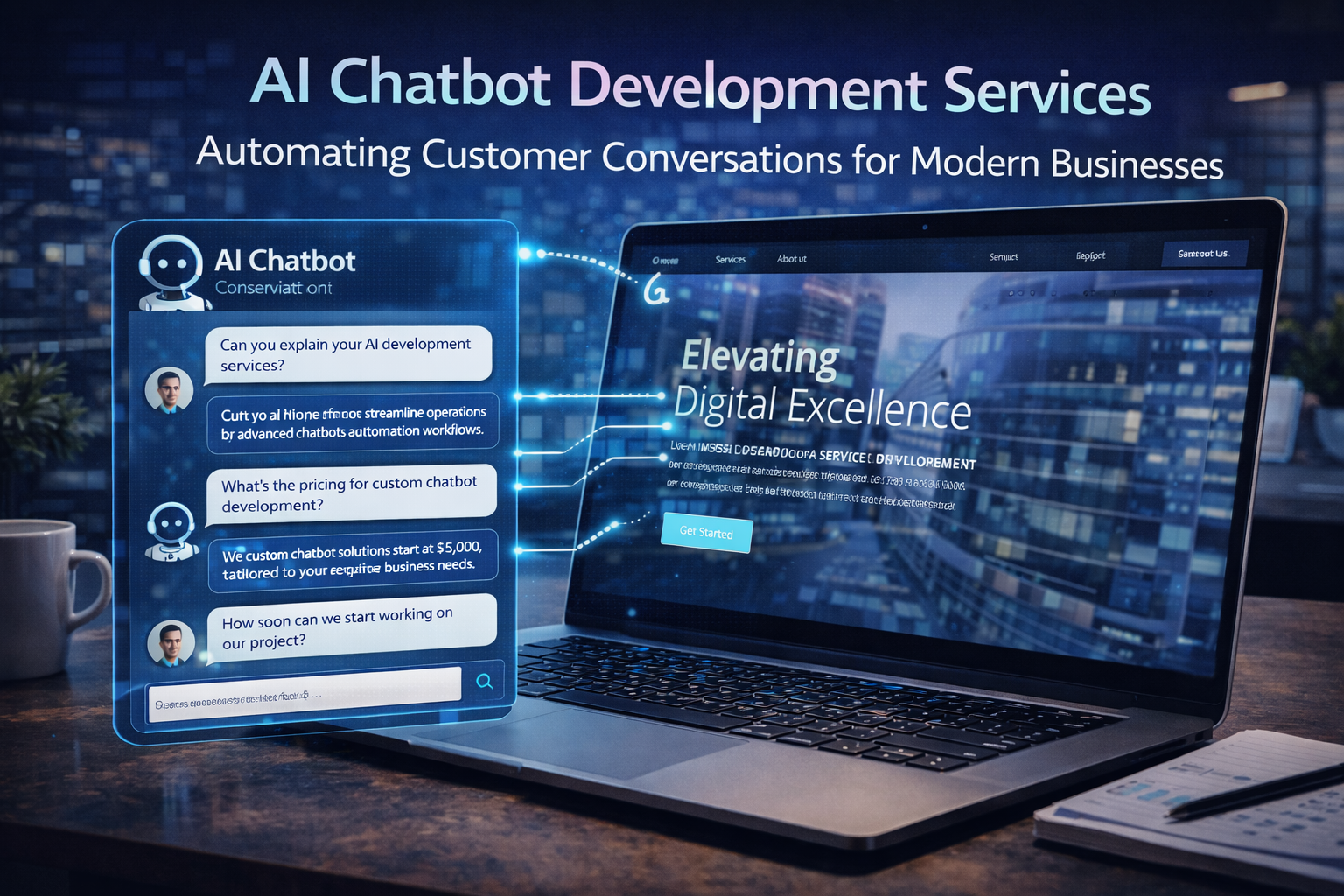
This is why many companies are now investing in AI chatbot development services. Instead of using basic chat tools with limited features, businesses are building customized AI chatbots that understand customer messages, respond intelligently, and support sales and support teams.
In 2026, AI chatbots are no longer considered experimental technology. They have become practical business tools that help companies improve response times, capture more leads, and deliver better customer experiences.
This article explains why businesses are investing in AI chatbot development services, how these systems work, and how they are transforming customer communication across industries.
The Changing Expectations of Modern Customers

One of the biggest reasons businesses are investing in chatbot technology is the rapid change in customer expectations. Today’s customers are used to instant communication. Messaging apps, social media platforms, and online services have trained people to expect quick responses.
When someone sends a message through a website chat window, they expect a reply within seconds. If the business takes too long to respond, the visitor may assume the company is unavailable or not interested in helping. In many cases, the visitor simply leaves the website and looks for another option.
This situation creates a major challenge for businesses. Human teams cannot always respond instantly, especially when they are handling multiple tasks at the same time. Customer support agents may already be helping other clients. Sales teams may be busy with meetings or calls. Small businesses may not even have dedicated staff to manage online inquiries.
AI chatbots help solve this problem by allowing businesses to respond immediately. When a visitor opens a chat window on a website, the chatbot can start the conversation right away. It can greet the visitor, ask what they need, and provide helpful information.
This instant response creates a better customer experience and increases the chances that the visitor will stay on the website longer. It also gives the business an opportunity to capture the visitor’s contact information and turn the conversation into a potential sale.
What AI Chatbot Development Services Actually Include
Many people think chatbots are simple tools that display pre-written answers to common questions. While early chatbots worked this way, modern AI chatbots are much more advanced. They use artificial intelligence and natural language processing to understand customer messages and respond in a more natural way.
AI chatbot development services involve creating customized chatbot systems that are designed to match the specific needs of a business. These systems are usually integrated into websites, messaging platforms, and customer relationship management systems.
A well-designed AI chatbot can perform several important tasks. It can answer frequently asked questions about services, pricing, or availability. It can guide visitors through different options and help them understand what the business offers. It can also collect useful information such as names, email addresses, phone numbers, and project details.
Another important function of modern chatbots is lead qualification. Instead of simply collecting contact information, the chatbot can ask questions that help determine whether the visitor is a serious prospect. This helps sales teams focus on the most promising leads.
Many AI chatbot systems can also schedule appointments automatically. For example, if a visitor wants to book a consultation, the chatbot can check available time slots and confirm the appointment without requiring manual work from the staff.
Because every business has different communication needs, chatbot development services often involve designing workflows that match the company’s customer journey. This means the chatbot does more than just chat. It becomes part of a larger automation system that helps manage customer communication more efficiently.
Why Businesses Are Increasing Their Investment in Chatbot Technology
The growing investment in AI chatbot development services is not only about improving convenience. It is also about solving several important business challenges.
One major challenge is the increasing volume of customer inquiries. As businesses grow and attract more visitors online, the number of messages and questions they receive also increases. Handling these inquiries manually can become overwhelming for customer support teams.
AI chatbots help manage this volume by handling routine conversations automatically. Many customer questions are simple and repetitive. Visitors may ask about operating hours, service areas, pricing, or appointment availability. Instead of requiring human agents to answer these questions repeatedly, chatbots can provide instant responses.
Another reason businesses are investing in chatbot technology is the ability to scale communication without dramatically increasing costs. Hiring additional staff can solve communication problems temporarily, but it also increases operational expenses. Chatbots allow businesses to handle larger volumes of inquiries without expanding their support teams.
Consistency is another important advantage. Human responses can vary depending on who is answering the message. Chatbots follow the same communication structure every time. This ensures that customers receive accurate information and a consistent experience.
Over time, these benefits can significantly improve both efficiency and customer satisfaction.
How AI Chatbots Improve Lead Generation

Lead generation is another major reason businesses invest in AI chatbot development services. Many website visitors arrive with questions or uncertainty about a product or service. If those questions remain unanswered, the visitor may leave the website without taking action.
AI chatbots help keep visitors engaged by starting conversations immediately. Instead of forcing users to search through multiple pages of content, the chatbot can ask what they are looking for and provide helpful guidance.
For example, a visitor might ask about the cost of a service. The chatbot can respond with general pricing information and then ask whether the visitor would like to receive a personalized quote. During this process, the chatbot can collect contact details and project information.
This interaction transforms a casual visitor into a potential lead. The collected information can then be stored in the company’s CRM system, allowing sales teams to follow up later.
Many businesses discover that chatbot conversations lead to higher conversion rates because they provide guidance at the exact moment when visitors are most interested.
How Chatbots Reduce Customer Support Costs
Customer support is one of the most resource-intensive parts of many businesses. Support teams often spend large amounts of time answering repetitive questions or helping customers with basic issues.
AI chatbots can handle many of these tasks automatically. They can provide instructions, direct customers to helpful resources, and answer common questions without requiring human involvement.
This approach allows support teams to focus on more complex problems that require human judgment and expertise. Instead of spending time on routine tasks, agents can dedicate their attention to high-value interactions.
The result is a more efficient support system that reduces workload without sacrificing service quality.
Over time, this efficiency can lead to significant cost savings for businesses that handle large volumes of customer inquiries.
The Role of AI Chatbots in Business Automation
AI chatbots are becoming an important part of broader business automation strategies. Instead of functioning as isolated tools, modern chatbots are often connected to other systems such as CRM platforms, marketing automation tools, and scheduling systems.
When these systems are connected, chatbots can trigger additional processes automatically. For example, after collecting a lead’s contact information, the chatbot can send a confirmation message, notify the sales team, and create a new contact record in the CRM.
This level of automation helps businesses maintain organized communication and ensures that leads are not forgotten or overlooked.
Companies like FutureForge AI Solutions focus on building these integrated automation systems. By combining AI chatbots with voice agents and workflow automation, businesses can create communication systems that manage both online and phone interactions efficiently.
This type of integration allows businesses to capture leads from multiple channels while maintaining consistent communication processes.
Industries That Benefit Most from AI Chatbot Development Services
AI chatbots can be used in many industries, but some sectors benefit more than others due to the nature of their customer interactions.
Service-based businesses often receive many inquiries from customers looking for estimates or consultations. Chatbots can collect project details and schedule appointments automatically, making the process faster and more convenient.
Healthcare providers use chatbots to answer common patient questions and manage appointment scheduling. This reduces pressure on front desk staff and improves patient access to information.
Real estate companies use chatbots to respond to property inquiries, provide listing details, and capture buyer information.
E-commerce businesses use chatbots to help customers find products, answer questions about shipping and returns, and assist during the purchasing process.
In each of these industries, chatbots help businesses respond faster and manage communication more effectively.
How Businesses Choose the Right AI Chatbot Development Service
Choosing the right chatbot solution requires careful planning. Businesses should begin by identifying their main communication challenges and determining what tasks the chatbot should perform.
Some companies need chatbots that handle basic customer support questions, while others require more advanced systems capable of qualifying leads and scheduling appointments.
Integration is another important factor. The chatbot should work smoothly with existing tools such as CRM systems, scheduling platforms, and communication channels.
Customization is also important. A chatbot should reflect the brand’s communication style and provide responses that match the company’s tone and messaging.
Working with experienced chatbot developers can help ensure the system is designed correctly from the start.
The Future of AI Chatbot Development
The future of chatbot technology looks promising. Advances in artificial intelligence are making chatbots more capable of understanding context and maintaining natural conversations.
Future chatbots will likely become even more personalized. They will be able to remember previous interactions, understand customer preferences, and provide more tailored responses.
Businesses are also beginning to combine chatbots with voice AI systems to create unified communication platforms. These platforms allow customers to interact through text or voice while maintaining consistent information and workflows.
As these technologies continue to evolve, chatbots will become even more important tools for managing customer relationships.
Conclusion
AI chatbot development services are becoming an essential investment for businesses that want to improve customer communication and remain competitive in a digital world.
Customers expect fast responses, and companies that cannot provide them risk losing valuable opportunities. AI chatbots allow businesses to respond instantly, capture leads more effectively, and reduce the workload on support teams.
By automating routine communication tasks, chatbots help businesses operate more efficiently while providing better experiences for customers.
As artificial intelligence technology continues to advance, chatbots will play an even larger role in how companies interact with their audiences.
Businesses that adopt these tools early will be better prepared to meet customer expectations and build stronger relationships in the future.


