
Generating leads is not the hardest part of growing a business anymore.
Most companies today can run ads, improve their website SEO, or publish content online and start receiving inquiries. Leads come from Google searches, social media, referral traffic, and paid advertising.
The real challenge begins after those leads arrive.
Someone fills out a form on your website.
Someone sends a message through your contact page.
Someone calls your business asking about your services.
Now someone has to respond.
Someone has to determine whether the person is a serious buyer or just asking questions.
Someone has to schedule the appointment, send follow-ups, and move the lead through the sales process.
This is where many businesses struggle.
Sales teams spend hours reviewing inquiries, replying to emails, returning calls, and filtering out leads that are not ready to buy.
Meanwhile, serious prospects may be waiting for a response.
Some leave.
Some contact competitors.
Some simply forget about the inquiry.
This is why more companies are now turning to automated lead qualification.
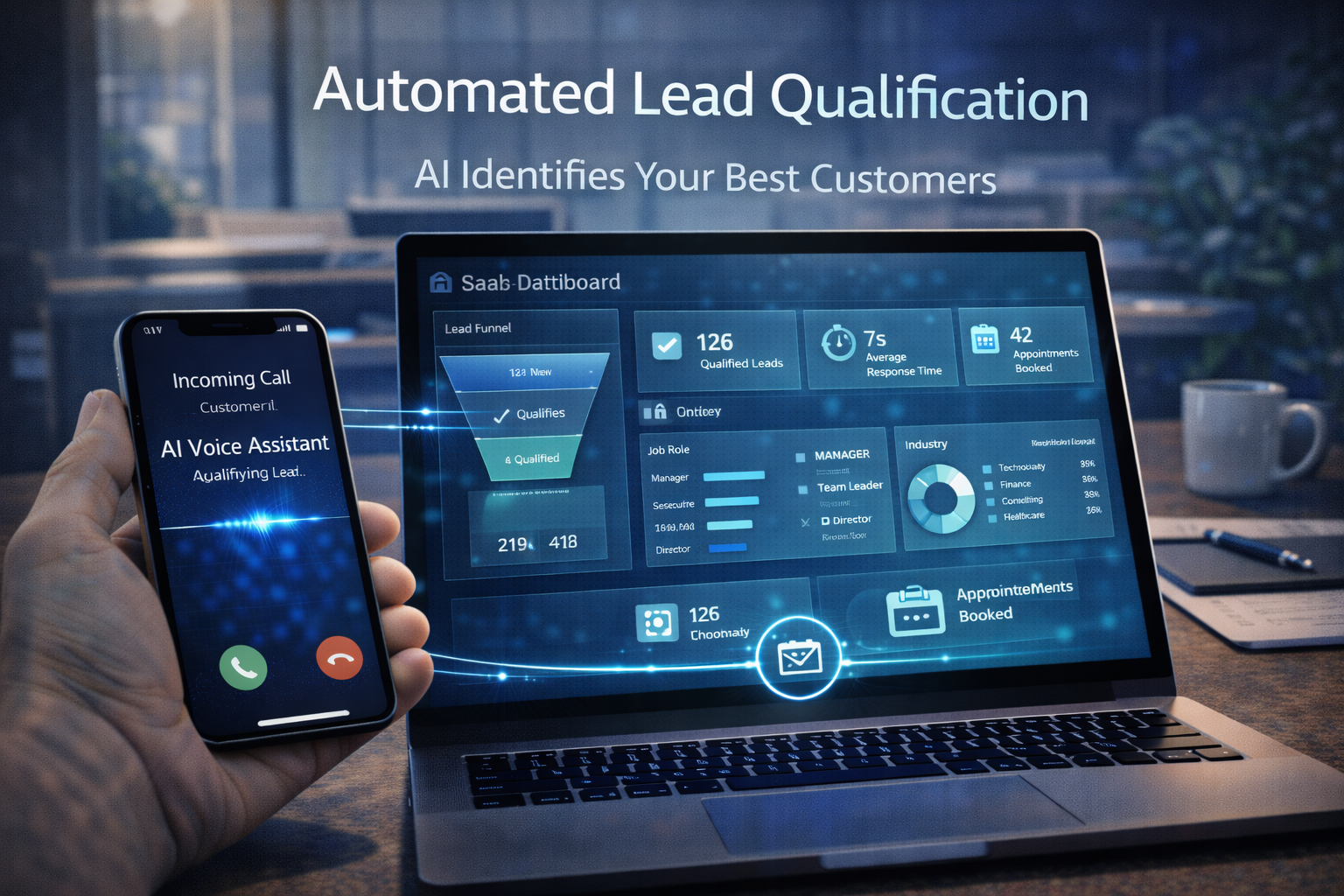
Automated lead qualification uses artificial intelligence and workflow automation to identify high-quality prospects instantly.
Instead of waiting for someone to review every inquiry manually, AI systems can capture information, evaluate lead quality, and route the best prospects to sales teams automatically.
For businesses that rely on inbound leads, this technology is quickly becoming one of the most powerful tools for increasing revenue.
In this guide, we will explore how automated lead qualification works, why it matters for modern businesses, and how AI communication systems are changing the way companies capture and convert new customers.
The Problem With Manual Lead Qualification
For decades, lead qualification was handled entirely by humans.
Sales representatives would review inquiries one by one and determine which prospects were worth pursuing.
At first, this approach seemed reasonable.
But as marketing channels expanded and lead volume increased, the manual process began to break down.
A typical business today may receive leads from many different sources.
A website form submission.
A phone call from a potential customer.
A message from social media.
An email inquiry.
Each lead needs attention.
Someone must read the message, understand the request, and determine whether the prospect is qualified.
When lead volume is low, this works fine.
But as businesses grow, the process becomes slow and inefficient.
Sales teams often face several problems:
Leads waiting too long for a response.
Important information missing from inquiries.
Unqualified leads consuming valuable time.
High-quality prospects going to competitors.
The biggest problem is response time.
When someone contacts a business today, they expect a quick answer.
If they do not receive one, they move on.
This is why manual lead qualification often results in lost opportunities.
What Automated Lead Qualification Means
Automated lead qualification is the process of using software and artificial intelligence to evaluate incoming leads automatically.
Instead of relying on humans to review every inquiry, AI systems analyze the information provided by the prospect.
The system collects data, evaluates intent, and determines whether the lead meets certain criteria.
For example, a service business might want to know:
Where is the customer located?
What service do they need?
How soon do they need the work done?
An automated lead qualification system can ask these questions through voice conversations, chat messages, or website forms.
Once the answers are collected, the system determines whether the lead should move forward.
Qualified leads can be sent directly to sales teams or automatically scheduled for consultation.
Less urgent inquiries can be placed into follow-up workflows.
This process allows businesses to prioritize the prospects most likely to become customers.
Why Response Speed Matters More Than Ever
Customers today move quickly.
When someone searches for a service online, they rarely contact only one company.
They usually contact several businesses at once.
Whichever company responds first often has the advantage.
Imagine a homeowner looking for a landscaping contractor.
They search online and find three companies.
They call the first one.
No answer.
They call the second one.
No answer again.
Then they call the third company.
Someone answers the phone immediately and schedules an estimate.
That third company now has the opportunity.
The first two companies may never even know the lead existed.
Automated lead qualification systems help prevent this situation.
They ensure that every inquiry receives a response instantly.
Whether the customer calls, fills out a form, or sends a message, the system begins collecting information immediately.
This speed dramatically improves the chances of converting leads into customers.
How Automated Lead Qualification Works
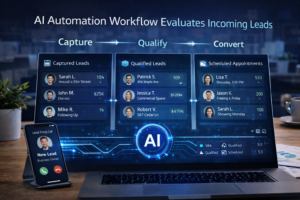
Automated lead qualification follows a structured process.
The system captures inquiries, gathers information, evaluates the lead, and routes the prospect to the appropriate next step.
Here is how it typically works.
Step One: Capturing the Lead
Leads arrive through various channels.
A phone call.
A website chat conversation.
A form submission.
A message from an advertisement.
An automated system captures this inquiry immediately.
Instead of waiting for a human response, the automation begins interacting with the prospect.
Step Two: Collecting Key Information
The system asks questions designed to understand the customer’s needs.
For example:
What service are you looking for?
Where are you located?
When would you like to start?
These questions help determine whether the lead is qualified.
The answers are stored automatically in a CRM system.
Step Three: Evaluating the Lead
Once the system collects the information, it evaluates the lead.
This evaluation may consider factors such as:
Location
Budget
Timeline
Service requirements
If the lead meets the business criteria, it is marked as qualified.
Step Four: Routing the Lead
Qualified leads can then be routed to the correct destination.
The system might schedule an appointment.
It might notify a sales representative.
It might send the prospect additional information.
This entire process can happen within minutes.
Technologies That Power Automated Lead Qualification
Several technologies work together to make automated lead qualification possible.
These tools allow businesses to interact with prospects and gather information automatically.
AI Voice Agents
AI voice agents answer phone calls and speak with customers in natural language.
They can ask questions, understand responses, and collect lead details.
This technology is especially useful for businesses that receive many inbound calls.
AI Chatbots
Chatbots interact with website visitors through messaging.
They can guide prospects through qualification questions and collect relevant information.
This helps businesses capture leads even when staff are unavailable.
CRM Automation
Customer relationship management systems store and organize lead data.
Automation tools can route qualified leads to sales teams and trigger follow-up workflows.
Machine Learning
Machine learning systems analyze historical data to improve lead scoring.
Over time, the system becomes better at identifying high-quality prospects.
The Benefits of Automated Lead Qualification
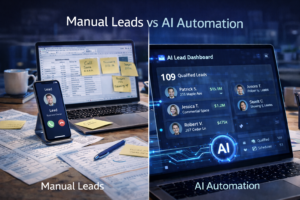
Automated lead qualification offers several major advantages for modern businesses.
One of the most important benefits is faster response time.
When prospects receive immediate responses, they are more likely to continue the conversation.
Another benefit is efficiency.
Sales teams spend less time reviewing unqualified leads and more time focusing on serious prospects.
Automation also improves consistency.
The system follows the same process for every lead, ensuring that no important information is missed.
Finally, automated lead qualification helps businesses scale.
As lead volume increases, the system continues to operate without requiring additional staff.
Industries That Benefit From Lead Qualification Automation
Many industries rely heavily on inbound leads.
For these businesses, automated lead qualification can significantly improve conversion rates.
Real estate agencies often receive calls from potential buyers and sellers.
AI systems can determine whether callers are serious prospects and schedule property viewings automatically.
Contractors and home service businesses also benefit from automation.
These companies often receive calls while working on job sites.
Automated systems can capture inquiries and schedule estimates instantly.
Medical practices, law firms, and consulting businesses can also use automated lead qualification to prioritize the most urgent inquiries.
How FutureForge AI Solutions Automates Lead Qualification
While many tools offer pieces of automation, building a fully functional lead qualification system requires careful integration.
This is where FutureForge AI Solutions helps businesses.
FutureForge specializes in building AI communication systems that capture and qualify leads automatically.
These systems combine AI voice agents, intelligent chat automation, and workflow integration.
For example, a FutureForge system can answer incoming calls instantly.
The AI voice agent can ask questions, collect lead information, and schedule appointments.
At the same time, website visitors can interact with AI chat assistants that guide them through the same qualification process.
All information is stored automatically in a CRM system.
This ensures that sales teams receive detailed lead data before contacting the prospect.
The goal is simple.
Instead of allowing opportunities to slip away, the system captures and organizes every inquiry.
Turning Automation Into More Clients
Automated lead qualification does more than improve efficiency.
It also increases the likelihood of converting prospects into paying customers.
When leads receive fast responses and clear communication, they feel confident moving forward.
Businesses that implement automated lead qualification often notice several improvements.
Higher response rates from prospects.
More appointments scheduled.
Better organization of lead data.
Reduced time spent on unqualified inquiries.
These improvements create a smoother path from first contact to final sale.
Implementing Automated Lead Qualification in Your Business
Businesses interested in automated lead qualification should begin by reviewing their current lead capture process.
Start by identifying where leads originate.
Are most inquiries coming from phone calls?
Website forms?
Online ads?
Once the lead sources are clear, the next step is defining qualification criteria.
What makes a prospect a good fit for your business?
The automation system can then be designed to ask the right questions and evaluate responses.
Integration with existing CRM tools ensures that all lead information is organized properly.
Finally, automated follow-up workflows can nurture leads that are not ready to buy immediately.
The Future of Lead Qualification
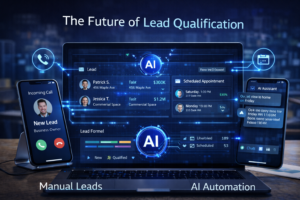
As artificial intelligence technology continues to improve, automated lead qualification will become even more sophisticated.
Future systems may analyze voice tone, conversation patterns, and behavioral data to evaluate prospects more accurately.
AI assistants will become more conversational and better at understanding complex questions.
Businesses will rely less on manual processes and more on intelligent systems that manage customer communication automatically.
For companies that generate a high volume of inquiries, automation will likely become essential.
Final Thoughts
Lead generation is only part of the sales process.
Capturing and qualifying those leads quickly is what determines whether opportunities become customers.
Manual processes often slow businesses down.
Prospects wait for responses, and many eventually move on to competitors.
Automated lead qualification solves this problem by ensuring that every inquiry receives immediate attention.
AI voice agents, chat automation, and intelligent workflows work together to capture information, evaluate prospects, and move qualified leads forward.
Businesses that implement these systems gain a powerful advantage.
They respond faster, organize leads more effectively, and convert more inquiries into real clients.
For companies looking to improve their lead management process, automated lead qualification is quickly becoming one of the most valuable technologies available today.


