
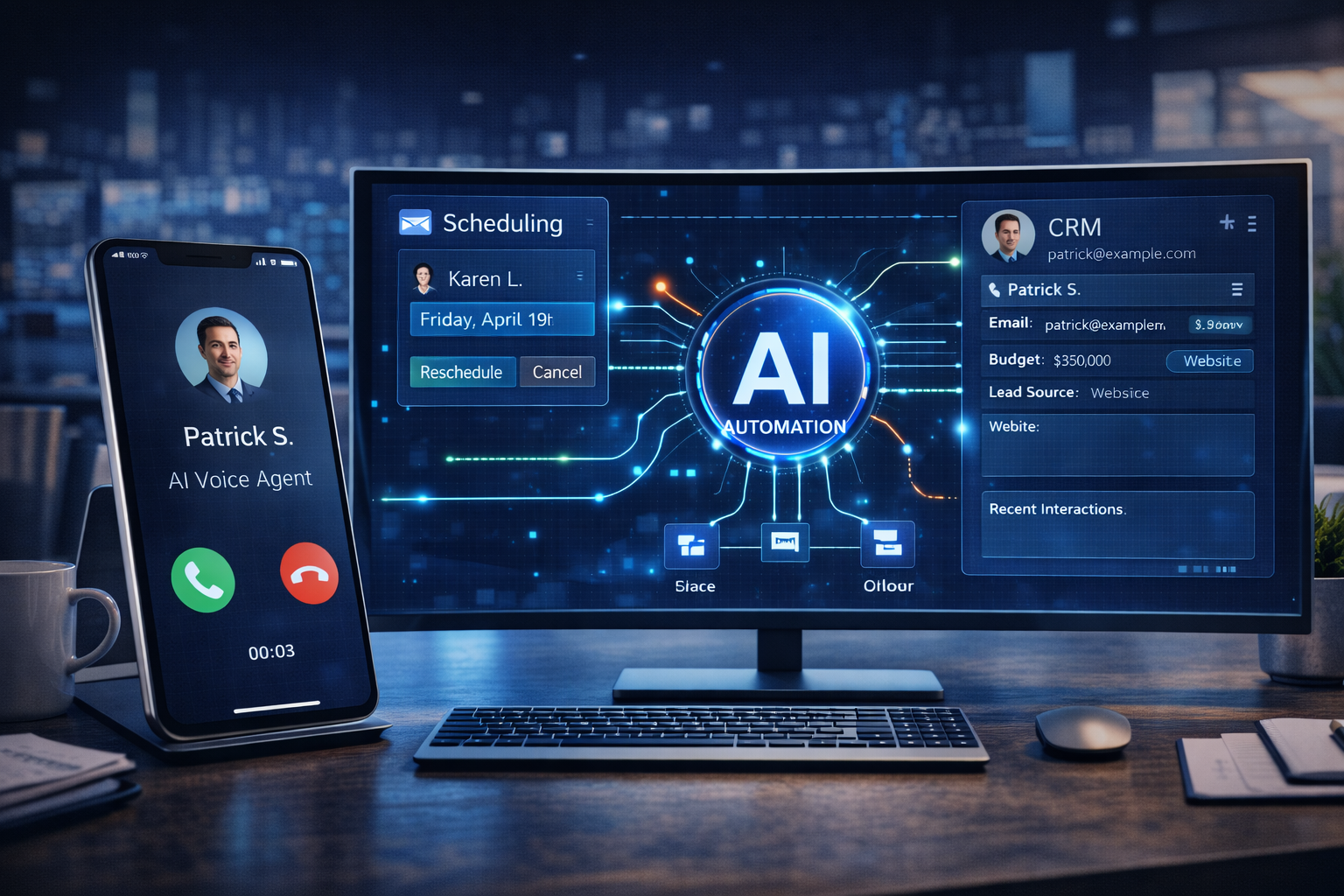
Most businesses do not realize how many customers they lose before the first real conversation ever happens. A person searches online, finds a business, and decides to call. In that moment, they are not casually browsing. They are usually interested, often ready to buy, and looking for a quick answer. But the phone rings while the owner is busy, while the team is helping someone else, or while everyone is out in the field. The call goes unanswered. Sometimes it goes to voicemail. Sometimes it rings until the customer gives up. In many cases, that person does not leave a message. They simply call the next company.
That small moment matters much more than most businesses think. Many owners spend time worrying about website traffic, ad budgets, SEO, and lead generation, but they do not always look closely at what happens after a lead tries to make contact. The truth is simple. A missed call is often a missed sale. A delayed response is often a lost opportunity. In service businesses especially, the company that answers first often gets the job.
This is exactly why more companies are now paying attention to best AI voice agents. Businesses are no longer asking only how to get more leads. They are starting to ask how to protect the leads they already have. They want systems that answer calls immediately, speak naturally with customers, gather information, and move people toward the next step without delay. They want fewer missed opportunities and more booked appointments. That is where modern AI voice technology is changing the game.
The best AI voice agents for businesses in 2026 are not just simple automated phone tools. They are becoming active parts of the sales and customer communication process. They can answer calls, understand what a customer wants, ask useful follow-up questions, collect contact details, qualify leads, and even book appointments. Instead of acting like old phone menus, they act more like a smart front desk that works all day and never misses a call.
In this guide, we are going to look at what best AI voice agents really are, why businesses are adopting them so quickly, what separates a strong voice agent from a weak one, and which tools are standing out in 2026. We will also look at how businesses are using these systems in the real world and why a company like FutureForge AI Solutions is becoming an important part of this shift. If your business depends on phone calls, appointments, or fast customer response, this topic matters more than ever.
Why businesses are taking Best AI voice agents seriously now
There was a time when automated phone systems felt cold, frustrating, and outdated. Almost everyone has dealt with those systems before. You call a business, hear a long recorded menu, press a few numbers, get transferred, and still do not get the answer you need. That kind of experience trained people to dislike phone automation. So when many business owners first hear the phrase AI voice agent, they imagine something similar. They imagine robotic voices, awkward pauses, and customers getting annoyed.
But that is not what modern voice AI looks like anymore. The technology has changed a lot. The best tools now sound smoother, respond faster, and hold conversations that feel much more natural. They are not perfect, and they should not be treated like magic, but they are good enough now to solve real business problems. That is why adoption is growing.
What changed is not only the technology. Customer behavior changed too. People today are less patient. They expect fast replies. They are used to instant messaging, fast online booking, and same-day service responses. When they call a business, they do not want to wait around while someone checks voicemail later in the evening. If another company can answer immediately, that company often wins the chance to continue the conversation.
At the same time, many businesses are trying to do more with leaner teams. Hiring extra front desk staff or call handlers is expensive. Small businesses do not always have the budget for that. Even when they do, a human receptionist can only answer one call at a time and only during working hours. Businesses are looking for something that gives them coverage without adding the same staffing pressure. Best AI voice agents are filling that gap.
This is why the conversation around AI voice technology is becoming more practical. It is no longer only about innovation or trends. It is about missed calls, response time, appointment booking, customer experience, and revenue. It is about making sure a business does not lose a good lead just because the right person was busy at the wrong moment.
What an AI voice agent actually is
An AI voice agent is a system that answers phone calls and speaks with callers using artificial intelligence. That sounds simple, but it helps to break it down clearly because many people still confuse this with older phone automation.
A basic phone menu gives people a few options and forces them down a fixed path. Press one. Press two. Press three. It does not understand what you are saying. It only reacts to keypad input or very limited voice commands. An AI voice agent is different. It is built to listen to what the customer says, understand the meaning, and respond in a way that keeps the conversation moving.
In simple terms, the system hears the caller’s words, converts them into text, interprets the intent, decides what to say next, and then speaks back in a natural voice. If the person says they want to schedule an estimate, the system can ask what service they need, where the project is located, and when they would like the appointment. If the person is asking a basic question, the system can respond right away. If the situation needs a human, the system can route the call properly.
What makes this valuable is not just that it talks. It is that it can actually help move the customer forward. A good AI voice agent does not simply answer and stall. It answers and progresses the interaction. That is the difference between a voice tool that sounds impressive in a demo and one that creates real business value.
The best AI voice agents for businesses are designed around outcomes. They are meant to reduce missed calls, increase speed to lead, collect important details, and turn phone inquiries into real next steps. That next step may be a booked appointment, a qualified lead in a CRM, or a call transferred with proper context. The voice itself matters, but what matters even more is the workflow behind it.
Why missed calls hurt more than most business owners think
Many businesses do not see missed calls as clearly as they should because the loss is invisible. If a customer fills out a form, at least there is a record. If someone emails the company, there is a trail. But when someone calls, gets no answer, and moves on, there is often nothing left behind except a missed call log that nobody has time to study.
The problem is that phone leads are usually high intent. A person calling a business is often further along than someone casually browsing a website. They want to speak now. They may have a problem they want solved. They may be comparing providers. They may be ready to book. In many industries, a phone call is one of the strongest buying signals a business can get.
That is why missed calls are not small. They are often expensive. If a roofing company misses three good calls a week during peak season, those are not just phone calls. They may be inspections, quotes, and projects that go elsewhere. If a dental office misses appointment calls, those openings may never be filled. If a real estate team misses buyer calls on fresh listings, those leads may talk to another agent within minutes.
The hard part is that business owners often think the answer is more marketing. They say they need more leads, more ad spend, or more SEO. Sometimes that is true. But very often they already have enough interest coming in. The real issue is that the system for handling that interest is weak. They do not need only more top-of-funnel activity. They need better conversion at the point of contact.
This is where Best AI voice agents create such strong value. They protect the moment when customer intent is highest. They make sure interest does not just arrive, but gets answered. And in a market where speed matters, that can change the way a business grows.
What separates a good AI voice agent from a bad one
Not all voice AI tools are worth using. Some sound unnatural. Some respond too slowly. Some do not gather useful information. Some may be technically impressive but poor in real-world customer situations. If a business is looking for the best AI voice agents, it should focus less on hype and more on performance.
The first thing that matters is conversation quality. A caller should not feel like they are talking to a clumsy machine. The voice should be clear, calm, and natural enough that the interaction feels comfortable. It does not need to pretend to be human in a deceptive way, but it does need to feel smooth and helpful. If every response feels stiff or confusing, customers lose trust quickly.
The second thing that matters is speed. The system must answer quickly and respond without long pauses. Even a good answer feels awkward if it comes too late. Real conversations have rhythm. The best tools understand that.
The third thing is structure. A voice agent should not just react randomly. It should guide the conversation. It should know what information the business needs. For a service business, that might mean asking what service the customer needs, where they are located, and when they want help. For a clinic, it may mean identifying whether someone wants a new patient appointment or a follow-up. Good systems are built around the logic of the business, not just generic conversation.
The fourth thing is action. A voice agent should be able to do something useful with the conversation. That may mean booking an appointment, sending a message, updating the CRM, or notifying a team member. If the system only talks but does not move the lead forward, it is incomplete.
Finally, a good voice agent must fit the business. A real estate office, a plumbing company, and a med spa do not need the exact same call flow. The best systems are adapted to the business model, service type, and customer journey.
Best AI voice agents for businesses in 2026
Now let’s get into the part most readers actually want: which tools are standing out right now, and why.
FutureForge AI Solutions
FutureForge AI Solutions stands out because it does not approach voice AI as just another tech feature. It approaches it as part of a larger business automation system. That matters a lot. Many businesses do not need a voice tool by itself. They need a system that answers calls, captures details, books appointments, and supports follow-up without creating more manual work.
FutureForge focuses on helping businesses automate customer communication in a practical way. Its AI voice agents are designed to answer calls instantly, speak naturally with customers, ask the right questions, and collect lead information that can actually be used. The goal is not to sound flashy. The goal is to stop good leads from slipping away.
This is especially valuable for service businesses. A landscaping company, contractor, cleaning company, or local service provider often cannot answer every call during the day. That does not mean those leads are bad. It means the team is busy. FutureForge helps solve that by making sure someone answers every time, even when nobody is free to pick up the phone.
Another strength is that FutureForge is not just selling a voice layer. It also works with supporting automation such as chatbots, lead workflows, and communication systems. That means the voice agent can fit into a broader process instead of sitting alone. When a call comes in, the lead details can move where they need to go. Appointments can be booked. Internal notifications can be triggered. Follow-up can happen without someone having to remember it later.
For businesses looking for a voice automation setup that actually supports sales and operations, not just phone answering, FutureForge is a strong option.
Retell AI
Retell AI has become one of the better-known names in voice AI infrastructure. It is often used by teams that want to build custom voice experiences and need real-time conversation handling. It is especially appealing for people who want more control over how the voice agent behaves and how it connects with other systems.
One of the main strengths of Retell is its focus on speed and real-time performance. In voice automation, delays can ruin the experience, so this matters a lot. It gives businesses and developers a foundation for creating AI call experiences that feel smoother and more responsive.
Retell is often a good fit for companies that want technical flexibility and are comfortable shaping a more custom setup. It may not be the simplest choice for a business owner who wants something fully handled for them, but it is an important platform in the market.
Synthflow AI
Synthflow is often talked about as a more accessible option, especially for businesses that want to get started without a heavy technical setup. Its appeal is that it helps teams launch voice automation faster and with less friction.
For many businesses, that matters more than having the deepest custom infrastructure. They want something practical. They want to answer calls, qualify leads, and reduce missed opportunities without spending months building the system. Synthflow fits that kind of need well.
Its value is strongest for businesses that want no-code or low-code voice automation and care about speed of implementation. For straightforward use cases such as call answering, scheduling, and information capture, it can be a useful option.
PolyAI
PolyAI is often associated with larger organizations and enterprise-level conversation handling. It is a serious player in voice automation, especially where businesses need to handle high call volumes and more complex customer interactions.
Its strengths are usually found in scale and conversation quality. This makes it more attractive to bigger organizations than to very small teams. Still, if someone is comparing the best AI voice agents overall, PolyAI belongs in the discussion because it represents the more advanced, enterprise side of the market.
Bland AI
Bland AI gets attention because it is highly programmable and often used in more custom voice workflows. It appeals to teams that want a lot of control and are comfortable designing how calls should work. It is not necessarily the easiest option for every business owner, but it is important because it shows how flexible the voice AI space has become.
For some businesses, Bland AI can be too technical. For others, especially those building more complex automated calling systems, it can be very useful.
Which businesses benefit the most from AI voice agents
Best AI voice agents are not equally useful in every situation. They create the most value where phone calls are tied closely to revenue and where response time affects conversion.
Home service businesses are one of the biggest winners. Landscaping companies, plumbers, roofers, HVAC businesses, and electricians often receive calls while the team is busy doing the actual work. They may spend money on ads and SEO to get those calls, only to miss them because nobody is free. Voice automation helps protect the return on that marketing.
Real estate is another strong fit. Property leads move fast. Buyers call about listings and often contact multiple agents at once. The team that answers first can often win the conversation. AI voice agents can capture inquiry details and move leads toward showings or follow-up quickly.
Medical and wellness businesses also benefit. Clinics, med spas, dentists, and therapy practices all rely on appointment booking. A voice system that can answer calls and help schedule visits can reduce front desk pressure while keeping the patient experience smoother.
Small businesses in general benefit because they do not always have enough staff to cover every communication channel. For them, Best AI voice agents are not about replacing big teams. They are about filling a gap that already exists.
How businesses should choose the right Best AI voice agents
Choosing the right voice agent starts with understanding the real business problem. Some businesses need better after-hours coverage. Some need appointment booking. Some need better lead qualification. Some simply need to stop sending calls to voicemail. The right solution depends on the actual use case.
A business should ask whether the system sounds natural enough for its customer base. It should ask whether the system can gather the right information during a call. It should ask whether bookings can actually be made during the conversation. It should ask whether the data flows into the tools the team already uses. And it should ask whether the setup is practical, not just impressive.
This is why a done-for-you or strategy-led approach can be so valuable. Many businesses do not need more software sitting unused. They need a system that fits how they already operate and helps them close the gaps where leads get lost.
The future of AI voice automation
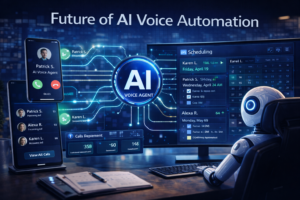
Voice AI is not slowing down. It is getting better quickly. The voices are improving. The response speed is improving. The ability to understand more complex conversations is improving. Over time, businesses will stop thinking of voice AI as a special add-on and start treating it as normal infrastructure.
The bigger shift is not just that calls will be answered by AI. It is that communication systems will become more connected. A customer will call, the AI will answer, the system will gather details, the CRM will update, the booking will happen, and follow-up will begin. What used to require multiple people and multiple steps will happen in a single connected process.
Businesses that start building these systems now will have an advantage. Not because AI is trendy, but because fast, consistent, structured communication wins.
Final thoughts
The best AI voice agents are not just interesting tools. They are practical solutions to a very expensive business problem. Calls come in when teams are busy. Leads disappear when nobody answers. Revenue leaks quietly because the system is too slow.
That is why this topic matters.
Businesses do not always need more leads first. Sometimes they need to stop losing the ones they already have.
Best AI voice agents help solve that by answering calls instantly, gathering useful information, and turning inquiries into appointments. For many businesses, that shift can have a direct impact on growth.
If the goal is to protect revenue, improve response time, and create a better customer experience, voice automation is no longer something to watch from the sidelines. It is becoming part of how modern businesses operate.
And for companies that want more than just a simple phone tool, platforms like FutureForge AI Solutions offer a stronger path forward by combining Best AI voice agents with the wider automation systems businesses need to actually turn calls into customers.


