
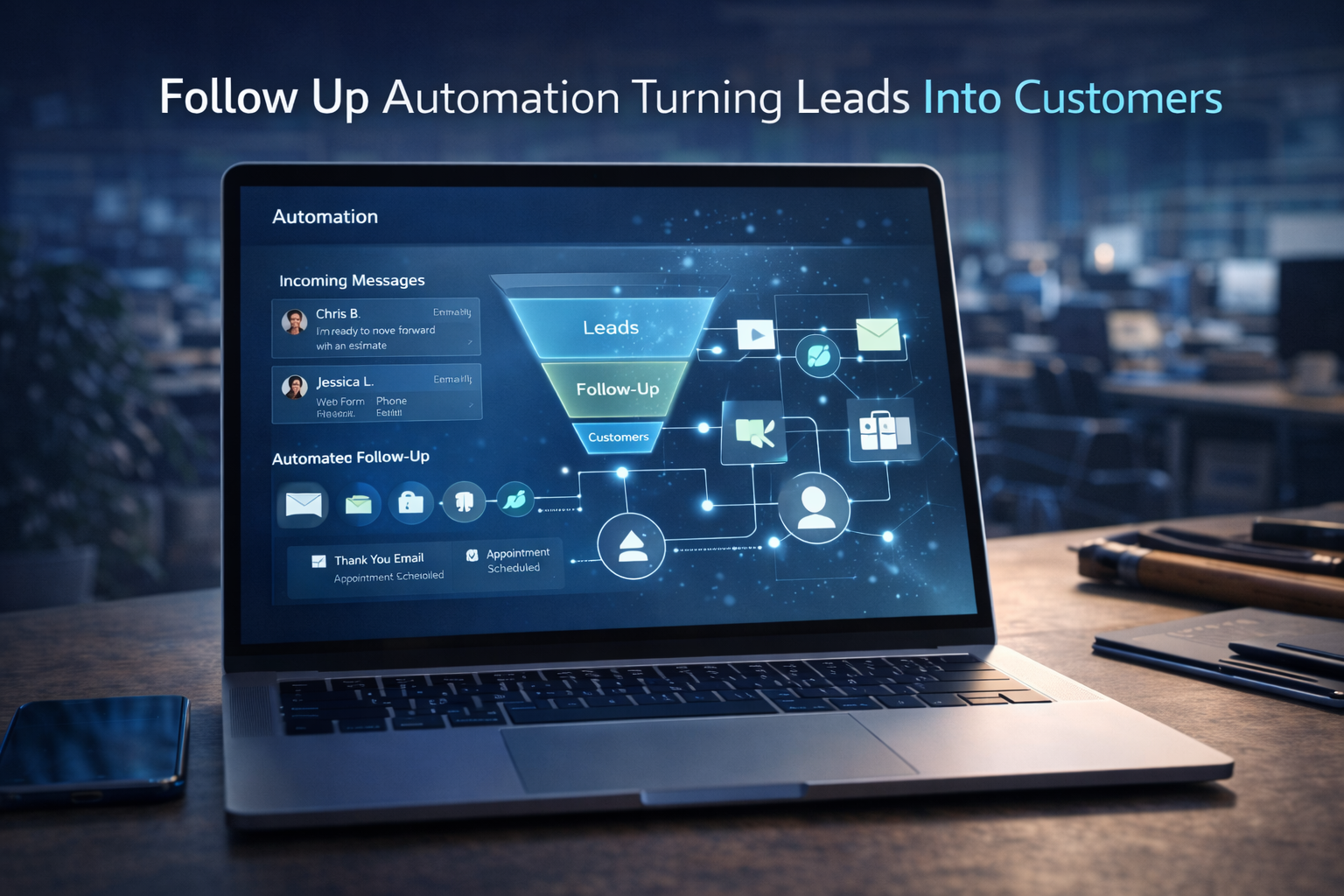
Follow Up Automation Is the Secret to Higher Lead Conversion
The Lead That Disappeared
Imagine this situation.
A potential customer visits your website. They look at your services and decide to reach out. Maybe they fill out a form. Maybe they send a message asking for more details. Maybe they call your business.
At that moment, they are interested. They are thinking about buying.
But then they wait.
Five minutes pass.
Fifteen minutes pass.
An hour passes.
Still no response.
Eventually, they open Google again and contact another company.
The first business never even knows what happened. From their perspective, nothing went wrong. They simply missed the moment when the customer was ready to talk.
This situation happens every day in almost every industry.
And it explains why many businesses struggle to convert leads even when they are generating plenty of interest.
The real problem is not always marketing. Sometimes the problem is what happens after the lead arrives.
This is exactly where follow up automation becomes powerful.
The Problem Most Businesses Misunderstand
When businesses want to grow, their first thought is usually marketing.
They believe they need more traffic. More advertising. More leads.
So they invest money in ads, SEO, social media, and promotions.
But something strange often happens.
Even when the number of leads increases, the number of customers does not grow as quickly as expected.
That is when business owners begin asking questions.
Are the leads bad quality?
Is the market too competitive?
Are customers not interested anymore?
Sometimes the real reason is much simpler.
The business is responding too slowly.
Leads arrive, but they are not followed up quickly enough. By the time someone responds, the customer has already moved on.
In other words, the business does not have a lead generation problem.
It has a follow-up problem.
What Happens Between Interest and Purchase
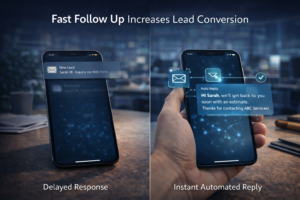
There is a short window between the moment someone becomes interested and the moment they make a decision.
During that window, the customer is actively looking for information.
They may be comparing options. They may be contacting several companies. They may be asking questions to see who responds first.
This is when businesses have the best chance to start a conversation.
But if that conversation does not begin quickly, the opportunity disappears.
Customers do not always wait.
They simply continue searching until someone answers.
The business that responds quickly often becomes the one that wins the job.
This is why response time plays such a critical role in lead conversion.
The faster a business follows up, the more likely it is to turn interest into a real customer.
The Silent Revenue Leak
Many businesses track their leads, but very few track their missed opportunities.
They measure how many forms were submitted. They measure how many calls were received.
But they rarely measure:
How long it took to respond.
How many leads were never contacted.
How many conversations started too late.
These losses are quiet. They do not appear clearly in reports.
But over time they can cost thousands in revenue.
For example, imagine a business receives ten inquiries in a day.
If they respond quickly to five of them and slowly to the other five, the results may be very different.
The first five may turn into conversations and bookings.
The other five may disappear.
From the business perspective, it simply looks like the conversion rate is low.
But the real issue is that half the leads were never handled properly.
This is why follow up automation matters.
It closes the gap between interest and response.
Why Manual Follow Ups Break Down
Running a small business requires constant attention.
Owners are busy managing operations, helping customers, coordinating employees, and solving problems throughout the day.
When a new lead arrives, someone has to stop what they are doing and respond.
Sometimes that happens quickly.
But often it does not.
A message might sit in the inbox until the evening.
A missed call might not be returned until the next day.
A form submission might be forgotten during a busy afternoon.
These delays are not intentional. They simply happen because people are busy.
But from the customer’s perspective, the reason does not matter.
All they see is a slow response.
That is why manual follow up systems eventually break down as businesses grow.
The more leads a business receives, the harder it becomes to manage them all manually.
The Shift Toward Faster Communication

Customer expectations have changed dramatically in recent years.
People are used to instant responses from technology.
They expect quick replies from messaging apps, websites, and online services.
This expectation has also moved into local businesses.
When someone reaches out today, they expect a response soon.
Not hours later. Not tomorrow.
Businesses that respond quickly create trust immediately.
Businesses that respond slowly risk losing the conversation before it begins.
This is why many companies are now focusing on response systems rather than just marketing.
Instead of asking how to generate more leads, they are asking how to respond faster to the leads they already have.
What Follow Up Automation Really Means
Follow up automation is simply a system that responds to leads automatically and continues communication without requiring manual effort every time.
Instead of waiting for someone to check messages, the system starts the conversation immediately.
For example, when a new lead appears, the system might automatically:
Send a confirmation message.
Ask a few simple questions.
Provide helpful information.
Offer a booking link.
Send reminders if the customer does not respond.
This keeps the conversation active while the customer is still interested.
Follow up automation does not replace human interaction. It simply ensures that the first response happens instantly.
That instant response can make a big difference in whether a lead continues the conversation or disappears.
Where Follow Up Automation Makes the Biggest Difference
Follow up automation is especially helpful in situations where delays usually happen.
One common example is missed phone calls.
When a business misses a call, the system can immediately send a message asking how it can help.
Another example is website forms.
When someone submits a form, the system can reply instantly instead of waiting for a manual response.
Automation can also help when leads stop responding.
If a customer shows interest but does not book an appointment, follow-up reminders can encourage them to continue the conversation.
Each of these small actions helps keep leads engaged.
Without automation, many of these opportunities would simply fade away.
Why Speed Builds Trust
Fast follow ups do more than just keep leads engaged.
They also create trust.
When a business responds quickly, customers feel that the company is professional and organized.
They feel confident that their questions will be handled properly.
On the other hand, slow responses can create doubt.
Customers may wonder if the business is too busy, disorganized, or unreliable.
Even if the service itself is excellent, the first impression may already be damaged.
Follow up automation helps businesses create that positive first impression consistently.
A Simple Before and After Scenario
Imagine a small service business receiving several inquiries each day.
Before automation, the process might look like this.
A customer sends a message asking about pricing.
The message sits in the inbox for two hours.
By the time someone responds, the customer has already contacted someone else.
Now imagine the same situation with follow up automation.
The customer sends a message.
Within seconds, they receive a response thanking them for reaching out and asking what service they need.
The conversation begins immediately.
The customer stays engaged and eventually books an appointment.
The lead was the same.
The marketing was the same.
The difference was the response system.
The Long-Term Impact on Lead Conversion
When follow up automation is used consistently, the results begin to compound.
More leads turn into conversations.
More conversations turn into appointments.
More appointments turn into customers.
This means businesses can generate more revenue without constantly increasing their marketing budget.
Instead of chasing more leads, they simply capture more value from the leads they already have.
This is one of the biggest advantages of improving follow-up systems.
Why Businesses Are Moving Toward Automation
More companies are adopting automation because it solves a problem that manual systems struggle with.
It ensures that leads receive attention immediately.
It keeps communication organized.
It reduces the chance that opportunities will be forgotten.
As competition increases, businesses that respond faster will continue to gain an advantage.
Follow up automation makes that speed possible.
Final Thoughts
Many businesses focus heavily on attracting leads.
But attracting leads is only one part of the process.
The real challenge is turning those leads into customers.
Slow responses, missed calls, and delayed follow ups quietly reduce conversion rates.
Follow up automation helps solve this problem.
By responding instantly, guiding customers through the next steps, and maintaining consistent communication, businesses can dramatically improve how many leads become customers.
Sometimes growth does not require more marketing.
Sometimes it simply requires a better system for following up.
And for many businesses, that system starts with follow up automation.


