
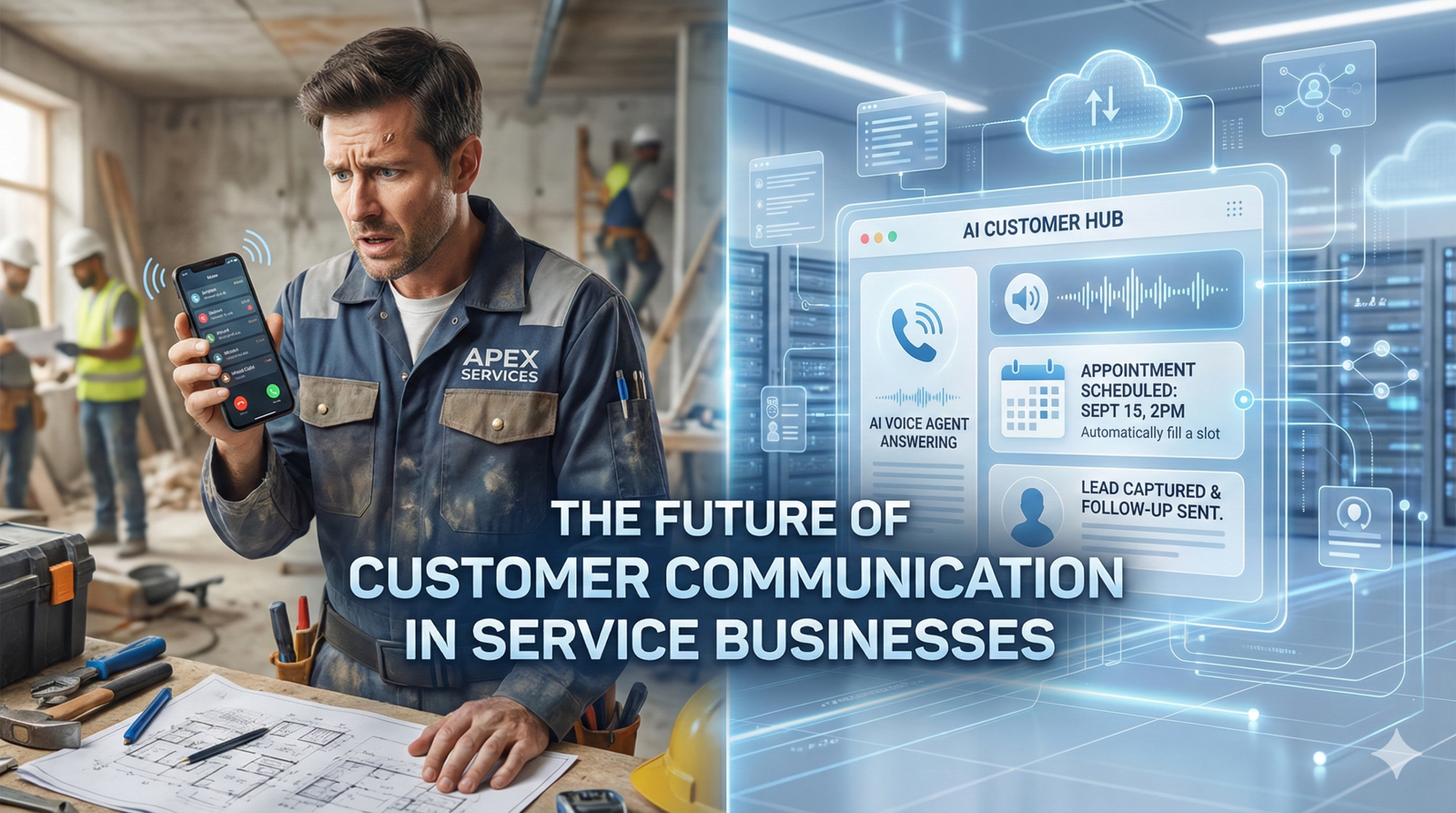
Customer communication is changing fast.
In service businesses, every job begins with a conversation. A phone call. A website form. A text message. A direct message on social media. That first interaction decides whether you win the job or lose it.
Many service companies focus heavily on marketing. They run ads. They improve their website. They invest in SEO. But they often ignore the most important part of the process, how they handle incoming inquiries.
The future of customer communication in service businesses is not about answering more calls manually. It is about building smarter systems that respond instantly, capture every opportunity, and create a smooth experience from first contact to completed job.
The businesses that understand this shift will grow faster and with less stress.
Customer Expectations Have Changed
Today’s customers expect speed.
They are used to ordering products in seconds. Booking rides instantly. Scheduling appointments online without speaking to anyone. This on-demand mindset has shaped how people behave.
When someone needs a service, landscaping, roofing, plumbing, paving, cleaning — they usually call multiple companies. They rarely wait. If one company does not answer, they move to the next.
Speed now equals trust.
A fast response feels professional. A slow response feels disorganized. Even if your work quality is excellent, poor communication creates doubt.
Customers also expect flexibility in how they communicate. Some prefer phone calls. Others prefer text messages or website chat. Many want quick confirmation messages and reminders. Managing all these channels manually becomes difficult as a business grows.
This is where many service businesses struggle.
The Communication Gap In Service Businesses
Most service businesses operate in the field. Teams are on job sites. They are driving between locations. They are managing tools, materials, and crews. Answering every call immediately is almost impossible.
When calls are missed, revenue is lost.
Many customers do not leave voicemails. They simply call the next company. This creates invisible revenue loss that most owners never track.
Manual communication systems also create problems:
- Messages written on paper and forgotten
- Delayed callbacks
- Double bookings
- Missed follow-ups
- Confusion about job details
Over time, these small issues create stress and inefficiency.
Owners often feel overwhelmed because they are constantly switching between operations and customer communication. Instead of focusing on growth, they are reacting to interruptions.
The future requires a different approach.
The Rise Of AI And Automation In Customer Communication

Artificial intelligence and automation are transforming how service businesses handle communication.
AI call automation allows businesses to answer every call instantly. Instead of relying on availability, businesses rely on structured systems.
Here is how modern communication automation works:
AI voice systems can answer calls 24 hours a day. Customers receive immediate attention, even outside business hours. No more missed opportunities.
- Structured Information Collection
Instead of casual conversations that miss details, automated systems ask clear and consistent questions:
- What service do you need?
- What is your location?
- When do you need the service?
This creates organized data from the beginning.
- Automatic Appointment Booking
AI systems can connect directly to your calendar. Customers can book appointments in real time. Confirmation messages are sent automatically.
- Follow-Up And Reminders
Automated text messages and emails remind customers about appointments. This reduces no-shows and improves professionalism.
Automation does not remove the human element. It strengthens it. It handles repetitive tasks so your team can focus on delivering quality service.
The Hybrid Model: Human + AI
The future of customer communication is not about replacing people. It is about combining technology with human expertise.
In a modern service business:
- AI handles the first layer of communication.
- Humans handle complex discussions and relationship building.
For example:
An AI voice system can answer the call, collect job details, and book the appointment. Then a team member can review the information and prepare properly for the job.
This creates:
- Faster response times
- Better organization
- Less stress for staff
- Improved customer experience
Customers care most about speed, clarity, and reliability. If they receive quick and professional communication, they feel confident.
Why Communication Will Define Competitive Advantage
In the next five to ten years, communication speed will become one of the biggest competitive advantages in service industries.
The first company to respond often wins the job.
Businesses that rely only on manual processes will struggle to compete with companies that use structured automation systems.
There are several reasons for this:
- Labor Costs Are Rising
Hiring full-time staff just to answer phones is expensive. Automation reduces the need for additional administrative staff.
- Customer Patience Is Decreasing
People do not wait hours for callbacks anymore. Immediate response will become the standard.
- Data Will Drive Decisions
Automated systems track:
- Call volume
- Response time
- Conversion rates
- Booking trends
This data allows businesses to improve continuously.
- Scalability Requires Structure
When businesses grow, communication volume increases. Without systems, growth creates chaos. With systems, growth creates opportunity.
Structure beats hustle.
From Reactive To Proactive Communication
Traditional service businesses operate reactively.
They answer calls when possible. They follow up when they remember. They solve problems after customers complain.
The future is proactive.
Automated systems can:
- Send appointment confirmations instantly
- Send reminder messages before the job
- Request reviews after completion
- Follow up with past customers for repeat services
Communication becomes part of a growth strategy, not just daily operations.
When communication is proactive, customers feel guided. They feel supported. This builds long-term trust.
Common Concerns About AI Communication
Many business owners hesitate because they have concerns about automation.
Let’s address them clearly.
“Will customers feel it is impersonal?”
Modern AI voice systems sound natural and professional. Most customers care more about quick service than about who answers the phone.
“Is it difficult to set up?”
Today’s automation platforms are easier to integrate than ever. Many systems connect directly with calendars and CRM software.
“Will it replace my staff?”
Automation supports staff. It removes repetitive tasks. Your team can focus on sales, service delivery, and relationship building.
The goal is not to remove people. It is to remove bottlenecks.
How Service Businesses Can Prepare For The Future

If you want to prepare your business for the future of customer communication, start with these steps:
- Track how many calls you miss each week.
- Measure your average response time.
- Review your booking process from start to finish.
- Identify repetitive communication tasks.
- Explore AI call automation solutions.
- Implement structured workflows.
- Monitor improvements in response speed and conversion rates.
Small improvements in communication can create large improvements in revenue.
The Bigger Picture: Communication Is Revenue
Many business owners separate marketing from operations. But communication connects both.
Marketing brings the lead. Communication converts the lead.
If communication fails, marketing investment is wasted.
The future of customer communication in service businesses is about building reliable systems that protect every opportunity. It is about answering faster, organizing better, and following up consistently.
Businesses that adapt will not just survive. They will lead.
Technology is no longer optional. It is becoming the foundation of modern service operations.
The companies that treat response time as seriously as revenue will dominate their markets.
Because in today’s world, they are directly connected.


