
Introduction
Running a small business has never been easy.
Most small business owners wear multiple hats every day. They answer customer calls, reply to emails, manage appointments, handle sales inquiries, follow up with leads, oversee operations, and still try to find time to grow the business.
In the early stages, this approach often works.
A small team can manage everything manually. Customer communication is manageable, appointments are easy to track, and follow-ups happen naturally.
However, as the business grows, something starts to change.
More leads begin coming in. More customers need support. More appointments need scheduling. More administrative work appears.
Growth creates opportunity, but it also creates complexity.
Many small businesses reach a point where their systems can no longer keep up with demand.
Calls go unanswered.
Leads are forgotten.
Follow-ups get delayed.
Customer inquiries pile up.
Team members become overwhelmed.
The business is growing, but efficiency is declining.
This is exactly why AI business automation has become one of the most important topics for small businesses in 2026.
Business owners are looking for ways to save time, improve customer communication, and handle more work without hiring large teams.
The good news is that AI business automation is no longer something only large corporations can afford.
Today, small businesses can use AI-powered systems to automate communication, capture leads, schedule appointments, update customer records, and streamline daily operations.
The goal is not to replace people.
The goal is to remove repetitive work so people can focus on activities that create growth.
When implemented correctly, AI business automation helps small businesses operate more efficiently, serve customers faster, and scale without becoming overwhelmed.
In this guide, we will explain exactly what AI business automation is, why it matters, and where small businesses should start.
What Is AI Business Automation?
The term “AI business automation” sounds technical, but the concept is actually very simple.
AI business automation means using artificial intelligence to handle repetitive business tasks automatically.
Instead of completing every task manually, businesses create systems that can perform those tasks on their own.
Think about how many repetitive activities happen every day.
Customers ask the same questions.
Appointments need scheduling.
Leads need follow-up.
Customer information needs updating.
Support requests need responses.
These tasks are important, but they consume a large amount of time.
AI automation helps manage these activities more efficiently.
For example, an AI chatbot can answer customer questions on your website.
An AI voice agent can answer incoming calls.
Automation workflows can send follow-up messages automatically.
CRM systems can update customer information without manual data entry.
Instead of relying on people to complete every step, the system handles much of the process automatically.
This creates a smoother experience for both the business and the customer.
Why Small Businesses Need AI Business Automation in 2026

A few years ago, automation was considered optional for many small businesses.
Today, that is changing quickly.
Customer expectations are increasing.
Competition is growing.
Operating costs continue rising.
Small businesses need better systems to remain competitive.
One major reason is customer response time.
Modern customers expect fast communication.
When someone visits a website, sends a message, or makes a phone call, they want help immediately.
If they do not receive a quick response, they often move on to another business.
This creates a challenge for small teams.
There are only so many hours in a day.
Employees cannot answer every call instantly.
They cannot monitor every communication channel at all times.
AI business automation helps solve this problem by creating systems that work continuously.
Customers receive faster responses.
Leads are captured automatically.
Appointments can be scheduled without delays.
Businesses become more responsive without increasing workload.
The Biggest Mistake Small Businesses Make With AI
One of the biggest mistakes small business owners make is thinking that AI is simply a collection of tools.
They hear about chatbots.
They hear about AI voice assistants.
They hear about automation platforms.
Then they start purchasing random software.
The result is often disappointing.
Why?
Because individual tools rarely solve the larger problem.
A chatbot may answer questions.
A scheduling tool may book appointments.
A CRM may store information.
But if these systems do not work together, the business still struggles.
The real power of AI business automation comes from creating connected systems.
For example:
A customer visits the website.
The AI chatbot starts a conversation.
The lead information enters the CRM automatically.
The system triggers follow-up messages.
An appointment is scheduled.
The sales team receives a notification.
Everything works together.
This is where many small businesses struggle.
They focus on tools rather than systems.
Successful automation is not about buying more software.
It is about creating processes that work efficiently from beginning to end.
What Small Businesses Should Automate First
One common question business owners ask is:
“Where should I start?”
The answer depends on the business, but several areas consistently produce strong results.
Customer Communication
Customer communication is often the best place to begin.
Every business communicates with customers.
People call.
They send messages.
They ask questions.
They request information.
These interactions happen constantly.
When communication becomes slow or inconsistent, opportunities are lost.
AI business automation helps businesses respond faster and more consistently.
AI chatbots can answer questions on websites.
AI voice agents can answer phone calls.
Automated messaging systems can respond to inquiries immediately.
This creates a better customer experience and helps capture more opportunities.
Lead Capture
Generating leads requires effort and investment.
Businesses spend money on advertising, SEO, social media, and content marketing.
However, generating leads is only part of the process.
Leads must also be captured and managed effectively.
Many businesses lose opportunities because there is no system for handling inquiries.
AI automation can collect information, qualify prospects, and organize leads automatically.
This helps ensure that potential customers do not fall through the cracks.
Appointment Scheduling
Scheduling appointments may seem simple, but it consumes a surprising amount of time.
Customers call.
Emails are exchanged.
Availability is checked.
Reminders are sent.
AI automation can handle much of this process automatically.
Appointments can be booked, confirmed, and managed without extensive manual effort.
Follow-Up Communication
Many sales opportunities are lost because businesses fail to follow up consistently.
People become busy.
Tasks are forgotten.
Priorities change.
Automation helps solve this issue.
Follow-up emails, text messages, and reminders can be triggered automatically.
Customers receive timely communication, and businesses maintain engagement.
Why Customer Communication Should Be the First Priority
If a small business can only automate one thing, customer communication is often the best place to start.
The reason is simple.
Every business depends on communication.
Customers need information.
Prospects need answers.
Appointments need scheduling.
Support requests need handling.
Communication sits at the center of everything.
When communication improves, many other parts of the business improve as well.
Response times become faster.
Customer satisfaction increases.
Lead conversion rates improve.
Team workload decreases.
This is why many successful automation strategies begin with communication systems such as AI chatbots and AI voice agents.
These tools help businesses create immediate value while building a foundation for more advanced automation in the future.
AI Chatbots for Small Businesses
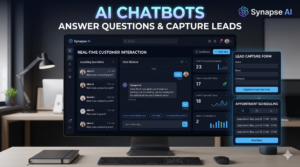
When most people hear the word AI, they immediately think about chatbots.
There is a good reason for that.
Chatbots are often the first automation tool small businesses implement because they can start delivering value almost immediately.
Think about what happens when someone visits your website.
They may have questions.
They may want pricing information.
They may want to know if you offer a specific service.
They may want to schedule a consultation.
Unfortunately, many small businesses are not available every minute of the day to answer those questions.
Visitors arrive at different times.
Some visit during business hours.
Others browse in the evening or on weekends.
Without an immediate response, many of these visitors leave the website without taking action.
This is where AI chatbots become extremely valuable.
Modern AI chatbots can answer questions, guide visitors, collect contact information, and even qualify leads automatically.
For example, imagine someone visits a local roofing company’s website at 9 PM.
The visitor wants an estimate for roof replacement.
Instead of filling out a form and waiting until the next day, the chatbot can start a conversation immediately.
It can ask questions about the property, gather contact information, and schedule a consultation.
By the time the business owner starts work the next morning, the lead is already organized and ready for follow-up.
This is one reason AI business automation for small businesses often starts with chatbot implementation.
It creates immediate improvements in customer communication and lead capture.
How AI Chatbots Improve Customer Experience
Customer experience has become one of the biggest competitive advantages available to small businesses.
Customers want fast answers.
They want clear information.
They want a simple experience.
When businesses respond slowly, frustration grows.
People begin looking elsewhere.
AI chatbots help solve this problem by creating immediate engagement.
The customer receives assistance right away.
Questions are answered.
Information is provided.
The conversation moves forward.
This creates a smoother experience that often leads to higher conversion rates.
More importantly, customers feel that the business is responsive and professional.
In today’s market, that perception matters.
AI Voice Agents for Small Businesses
While chatbots help website visitors, many businesses still rely heavily on phone calls.
This is especially true in industries such as:
- HVAC
- Plumbing
- Roofing
- Real estate
- Healthcare
- Legal services
- Home services
For these businesses, missed calls often mean missed revenue.
A potential customer may only call once.
If nobody answers, they move on to a competitor.
This is where AI voice agents have become one of the most exciting developments in AI business automation.
An AI voice agent can answer calls instantly, even when employees are busy or the office is closed.
Unlike traditional automated phone systems, modern AI voice agents can hold natural conversations.
They can answer questions.
They can collect information.
They can qualify leads.
They can schedule appointments.
They can route calls when necessary.
Most importantly, they ensure that every caller receives attention.
For a small business, this can make a significant difference.
Instead of losing opportunities after business hours, the company remains available around the clock.
Why AI Voice Agents Are Growing So Fast
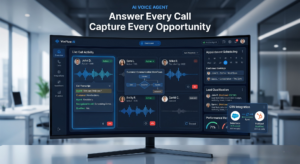
Customer expectations continue changing.
People want answers immediately.
They do not want to leave voicemails.
They do not want to wait until tomorrow.
They want help now.
AI voice agents help small businesses meet these expectations without dramatically increasing staffing costs.
A small business owner may not be able to hire multiple receptionists.
However, they can implement a voice automation system that answers every call consistently.
This is one reason AI business automation for small businesses is becoming increasingly popular.
Technology now allows smaller organizations to provide a level of responsiveness that was previously difficult to achieve.
Workflow Automation: The Hidden Growth Engine
When people think about automation, they usually focus on customer-facing tools such as chatbots and voice agents.
However, some of the biggest efficiency gains happen behind the scenes.
This is where workflow automation becomes important.
Workflow automation means creating systems that automatically perform tasks after a specific action occurs.
For example:
A customer submits a form.
The system automatically:
- stores customer information
- sends a confirmation email
- notifies the sales team
- creates a CRM record
- schedules a follow-up task
Without automation, employees would need to complete each of these steps manually.
With automation, the process happens automatically.
This saves time, reduces mistakes, and creates a more organized operation.
CRM Automation for Small Businesses
Customer relationship management systems are valuable because they store customer information in one place.
However, many businesses fail to use their CRM effectively.
The reason is simple.
Manual data entry takes time.
Employees become busy.
Records are forgotten.
Information becomes outdated.
AI business automation helps solve these challenges.
Instead of requiring employees to update every detail manually, automation can update records automatically.
For example:
A customer calls the business.
The AI voice agent collects information.
The CRM record updates automatically.
Notes are added.
Follow-up tasks are created.
The sales team receives a notification.
Everything happens without manual effort.
This creates cleaner data and a more efficient sales process.
Lead Generation Automation
Generating leads is one of the most important activities in any business.
However, many companies focus entirely on attracting leads and forget about managing them.
A lead that receives no response has very little value.
AI business automation helps businesses handle leads more effectively.
The process often looks like this:
A prospect discovers the business.
They visit the website.
A chatbot starts a conversation.
The lead information enters the CRM.
The system sends follow-up communication automatically.
An appointment is scheduled.
The sales team receives the information they need.
The entire process becomes more organized and predictable.
This helps businesses maximize the value of every lead they generate.
Appointment Booking Automation
Scheduling appointments may not seem like a major challenge.
However, when businesses begin growing, scheduling quickly becomes time-consuming.
Customers need available time slots.
Appointments need confirmation.
Reminders need sending.
Changes need updating.
These tasks consume valuable time.
AI business automation can handle much of this process automatically.
Customers can book appointments online or through an AI voice agent.
Availability is checked automatically.
Confirmation messages are sent immediately.
Reminders are delivered before appointments.
The result is a smoother experience for customers and less administrative work for employees.
Real Example: HVAC Company
Let’s look at a practical example.
An HVAC company invests in advertising to generate leads.
Potential customers call throughout the day.
Some calls happen during business hours.
Others happen after hours.
Before automation, many calls go unanswered.
Some callers leave voicemails.
Others contact competitors.
The company loses opportunities.
After implementing AI business automation, the process changes.
An AI voice agent answers every call.
Customer information is collected automatically.
Service requests are categorized.
Appointments are scheduled.
Technicians receive notifications.
The business captures more leads without increasing administrative workload.
Real Example: Cleaning Service
A cleaning company faces a different challenge.
Customers frequently request quotes.
Employees spend significant time answering repetitive questions.
Pricing discussions consume hours every week.
An AI chatbot helps automate the process.
Website visitors receive immediate responses.
Information about property size and service requirements is collected automatically.
Qualified leads are sent directly to the sales team.
The company spends less time answering routine questions and more time serving customers.
Real Example: Real Estate Agency
Speed is critical in real estate.
Potential buyers and sellers often contact multiple agents.
The first meaningful conversation can determine who wins the business.
AI business automation helps agencies respond immediately.
Website inquiries trigger automated follow-up.
AI chatbots answer questions.
AI voice agents handle incoming calls.
Lead information enters the CRM automatically.
Agents receive qualified prospects rather than raw inquiries.
This improves both efficiency and conversion rates.
Why Small Businesses Should Focus on Systems Instead of Tools
One of the most important lessons in AI business automation is that success comes from systems, not tools.
A chatbot alone will not transform a business.
A voice agent alone will not solve every problem.
A CRM alone will not create efficiency.
The greatest results happen when these components work together.
The chatbot captures leads.
The CRM stores information.
The automation workflow manages follow-up.
The voice agent handles communication.
Together, these systems create a complete customer journey.
This is the foundation of effective AI business automation for small businesses.
The goal is not simply to add technology.
The goal is to build a business that operates more efficiently, serves customers better, and scales more effectively.
How Much Does AI Business Automation Cost?
One of the first questions small business owners ask is:
“How much does AI business automation cost?”
The answer depends on several factors, including the size of the business, the complexity of the automation, and the systems being implemented.
However, many business owners ask the wrong question.
Instead of asking how much automation costs, it is often more useful to ask:
“What is the cost of not automating?”
Think about the time spent every week on repetitive tasks.
How many hours are spent:
- answering the same questions
- scheduling appointments
- updating customer records
- following up with leads
- manually sending reminders
- responding to routine inquiries
Now consider the opportunities that are lost.
Missed calls.
Forgotten leads.
Delayed responses.
Unorganized customer information.
These problems have a real financial impact.
AI business automation helps reduce these hidden costs.
For many small businesses, the value comes not only from saving money but also from increasing revenue through better customer communication and lead management.
A business that captures more leads and responds faster often sees a return that far exceeds the cost of implementation.
The Real ROI of AI Business Automation
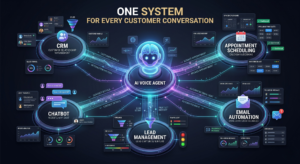
The return on investment from AI business automation usually comes from multiple areas.
Many business owners expect automation to simply reduce workload.
While that is certainly true, the benefits often go much further.
More Leads Captured
Every lead matters.
If a customer calls and nobody answers, that opportunity may be gone forever.
Automation helps ensure inquiries receive immediate attention.
More conversations often lead to more customers.
Faster Response Times
Speed matters.
Customers want answers quickly.
Businesses that respond faster frequently convert more leads than competitors that respond slowly.
Increased Productivity
Employees spend less time on repetitive administrative work.
This allows them to focus on activities that generate revenue and strengthen customer relationships.
Better Customer Experience
Customers appreciate fast and consistent communication.
Positive experiences often lead to repeat business and referrals.
Scalability
As the business grows, automation helps manage increased activity without requiring proportional increases in staffing.
This creates a more sustainable growth model.
Common AI Business Automation Mistakes to Avoid
AI automation can deliver incredible results when implemented correctly.
However, there are several mistakes that businesses should avoid.
Trying to Automate Everything at Once
Some business owners become excited about AI and attempt to automate every process immediately.
This often creates confusion.
A better approach is to start with one or two high-impact areas and expand gradually.
Choosing Tools Without a Strategy
Many businesses purchase software without a clear plan.
The result is a collection of disconnected tools that do not work together.
Always focus on building systems rather than collecting software.
Ignoring Customer Experience
Automation should improve customer experience, not make it worse.
The goal is to create faster, smoother interactions.
If automation creates frustration, adjustments are needed.
Failing to Measure Results
Businesses should track performance.
Important metrics may include:
- lead response times
- appointment bookings
- customer satisfaction
- conversion rates
- operational efficiency
Measuring results helps identify what is working and where improvements can be made.
How FutureForge AI Solutions Helps Small Businesses
Many small businesses know they need automation.
The challenge is figuring out where to begin.
This is where strategic implementation becomes important.
At FutureForge AI Solutions, the focus is not simply on providing individual tools.
The goal is to build complete automation systems that help businesses operate more efficiently and grow more effectively.
Instead of treating AI as a collection of separate technologies, FutureForge helps businesses create connected systems that work together.
These systems may include:
- AI chatbots
- AI voice agents
- CRM automation
- lead management automation
- appointment scheduling automation
- customer communication workflows
When these systems are connected, businesses create a smoother customer journey.
A lead enters through a website.
The chatbot starts a conversation.
Information enters the CRM automatically.
Follow-up messages are triggered.
Appointments are scheduled.
The sales team receives notifications.
Everything works together.
This system-focused approach often produces better results than implementing isolated tools.
For small businesses, this can mean:
- more captured leads
- fewer missed opportunities
- improved customer communication
- greater operational efficiency
- scalable growth
AI Business Automation Roadmap for Small Businesses in 2026
Many business owners feel overwhelmed when they first explore AI.
There are countless tools, platforms, and technologies available.
The easiest way to approach automation is through a simple roadmap.
Step 1: Automate Customer Communication
Begin with communication.
Implement AI chatbots and AI voice agents.
Make sure customers receive immediate responses.
This often creates the fastest return on investment.
Step 2: Automate Lead Capture
Create systems that automatically collect and organize lead information.
Every inquiry should enter a structured process.
Step 3: Automate Follow-Up
Many sales opportunities are lost because follow-up never happens.
Automation ensures prospects receive timely communication.
Step 4: Automate Appointment Scheduling
Reduce administrative work by allowing customers to book appointments automatically.
Step 5: Connect Everything Together
The final step is integration.
Connect communication systems, CRM platforms, scheduling tools, and workflows.
This creates a complete automation ecosystem.
The Future of AI Business Automation
AI technology is evolving rapidly.
What seems advanced today may become standard tomorrow.
Over the next few years, small businesses will likely see several major developments.
AI conversations will become even more natural.
Voice agents will handle increasingly complex interactions.
Automation systems will become more intelligent.
Customer experiences will become more personalized.
Businesses that adopt automation early will have an advantage.
They will gain experience, improve processes, and build efficient systems before competitors catch up.
The future is not about replacing people.
It is about helping people work more effectively.
The businesses that understand this will be in a strong position to grow.
Why AI Business Automation Is No Longer Optional
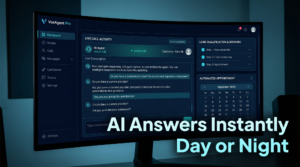
A few years ago, automation was considered a competitive advantage.
Today, it is becoming a business necessity.
Customers expect fast responses.
Competition continues increasing.
Operational efficiency matters more than ever.
Small businesses that continue relying entirely on manual processes may find it increasingly difficult to keep up.
AI business automation provides a practical solution.
It helps businesses save time, improve communication, capture more leads, and scale more efficiently.
Most importantly, it allows business owners to focus on growth rather than getting trapped in repetitive daily tasks.
Conclusion
Small business owners face constant pressure to do more with limited time and resources.
Customer expectations are rising.
Competition is increasing.
Administrative work continues growing.
The good news is that businesses no longer need massive teams or enterprise-level budgets to improve efficiency.
AI business automation gives small businesses access to tools and systems that can streamline operations, improve customer communication, and support growth.
Whether through AI chatbots, AI voice agents, workflow automation, CRM automation, or lead management systems, the goal remains the same:
Reduce repetitive work and create better customer experiences.
The most successful businesses in 2026 will not necessarily be the ones using the most AI tools.
They will be the ones using AI strategically.
By starting with customer communication, lead capture, appointment scheduling, and workflow automation, small businesses can build a strong foundation for long-term growth.
AI business automation is not just about technology.
It is about creating systems that help businesses work smarter, serve customers better, and scale with confidence.
Frequently Asked Questions
What is AI business automation?
AI business automation uses artificial intelligence to automate repetitive business tasks such as customer communication, lead management, appointment scheduling, and workflow processes.
Is AI business automation worth it for small businesses?
Yes. Many small businesses use automation to save time, improve efficiency, and provide faster customer service.
What should a small business automate first?
Customer communication is often the best starting point. AI chatbots and AI voice agents can provide immediate value.
Can AI answer customer calls?
Yes. AI voice agents can answer calls, collect information, qualify leads, and schedule appointments.
Can AI automate customer support?
Yes. AI systems can answer common questions and assist customers without requiring constant human involvement.
What is the difference between AI automation and traditional automation?
Traditional automation follows predefined rules. AI automation can understand context, learn patterns, and handle more dynamic interactions.
Can AI help generate more leads?
Yes. AI can improve lead capture, qualification, and follow-up processes, helping businesses convert more opportunities.
How does AI help with appointment booking?
AI systems can schedule appointments, send confirmations, and deliver reminders automatically.
Do small businesses need technical expertise to use AI automation?
Not necessarily. Many businesses work with implementation partners such as FutureForge AI Solutions to design and manage automation systems.
What industries benefit most from AI business automation?
Almost every industry can benefit, including home services, healthcare, real estate, legal services, consulting, agencies, and professional services.


